
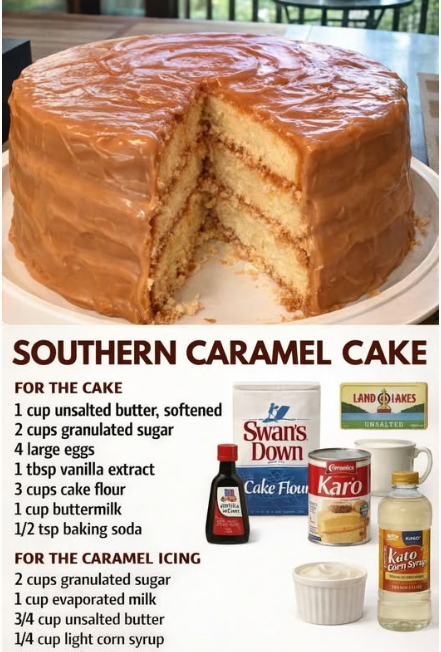
Southern Caramel Cake: A Masterclass in Sugar Chemistry
Introduction: The Architecture of the Southern Classic
In the hierarchy of holiday desserts, the Southern Caramel Cake sits on a throne of gold. Unlike a salted caramel or a fudge cake, this recipe is a study in Temperature Control and Sucrose Stabilization. On this Wednesday, December 24, 2025—Christmas Eve—this cake serves as the perfect centerpiece, offering a rich, burnt-sugar depth that balances the festive winter spirit.
This guide will explore the Leavening Power of Buttermilk, the reason why Evaporated Milk is essential for a smooth icing, and the “Cold-Whisk” technique that prevents your caramel from turning into gritty sand. We will delve into why this recipe is a “Don’t Lose” staple, focusing on the molecular bond between butter and brown sugar.
The Batter: The Fluffy Foundation
- 2½ Cups All-Purpose Flour: AP flour provides the perfect “middle-ground” protein content (approx. 11%). This creates enough structure to hold the heavy caramel icing without the cake becoming tough.
- 1 Cup Buttermilk: This is the Chemical Catalyst. The lactic acid in the buttermilk reacts with the ½ tsp of baking soda to produce an immediate rise. This “Acid-Base” reaction also breaks down gluten strands, ensuring the cake is “melt-in-your-mouth” tender.
- 1 Cup Unsalted Butter (Softened): Butter provides the fat needed to coat the flour particles (shortening the gluten). Using unsalted butter allows you to control the sodium levels, which is vital when working with a highly sweet icing.
- 4 Large Eggs: These provide the Structural Emulsifiers. The yolks contain lecithin, which prevents the buttermilk and butter from separating into a lumpy mess.
