
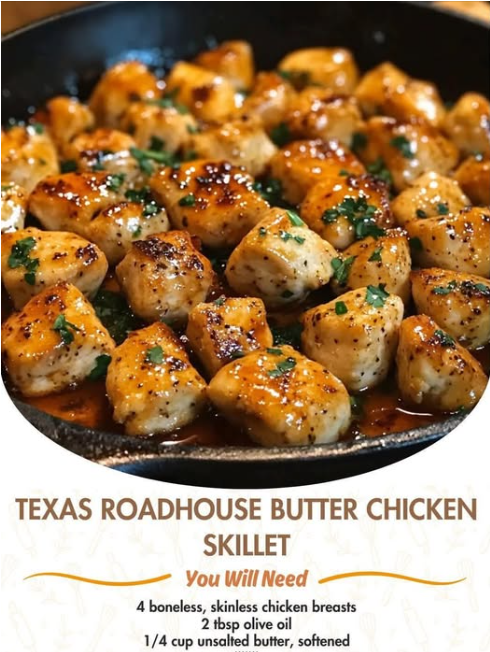
Texas Roadhouse Butter Chicken Skillet: A Study in Lipid-Honey Emulsification
Introduction: The Physics of the “Sweet-Salty” Glaze
In the realm of high-protein comfort food, the Texas Roadhouse Style Butter Chicken Skillet represents a triumph of Surface-Area Maillard Reactions. On this Thursday, December 25, 2025—Christmas Day—this recipe offers a robust, savory alternative to traditional holiday poultry. The technical brilliance of this dish lies in the Liquid-Solid Phase Transition of the butter-honey compound. By applying a cold-stable lipid (butter) to a high-heat protein (seared chicken), we create a viscous coating that clings via molecular adhesion, ensuring the honey’s sugars caramelize without burning into acrid carbon.
This guide explores the Myofibrillar Contraction of the chicken breast, the Aromatic Volatilization of garlic powder, and the Hydroscopic Balance of honey as a glaze stabilizer.
Ingredients: The Molecular Building Blocks
- 4 Boneless Skinless Chicken Breasts: The Protein Substrate. These lean muscles require precise thermal management to avoid denaturation-induced dryness.
- 2 tbsp Olive Oil: The Thermal Conductor. Olive oil has a higher smoke point than butter, allowing the chicken to achieve a golden crust (Maillard reaction) before the butter is introduced.
- 1/4 Cup Unsalted Butter (Softened): The Flavor Carrier. Butter contains milk solids that, when heated, undergo Pyrolysis, adding a nutty “Brown Butter” (Beurre Noisette) profile.
- 2 tsp Honey: The Caramelization Agent. Honey is a supersaturated sugar solution that provides the “sticky” texture and acts as a pH balancer for the savory salt and garlic.
- 1 tsp Garlic Powder & 1/2 tsp Salt: The Ionic Flavor Potentiators. Garlic powder provides dehydrated sulfur compounds that rehydrate in the butter’s moisture, releasing pungent aromatics.
