
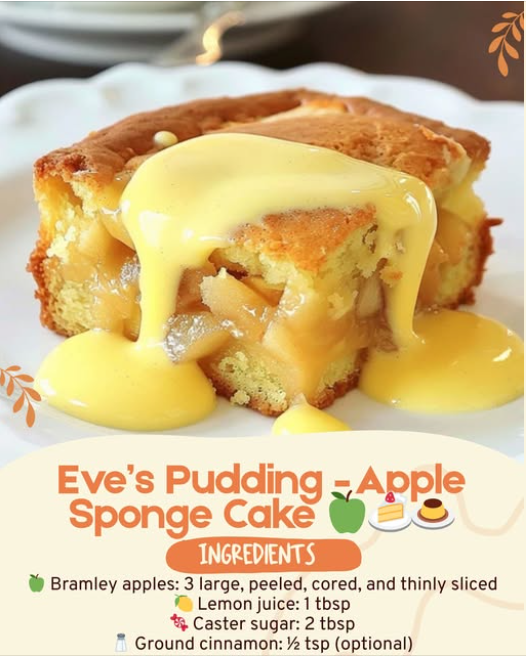
The Architecture of Eve’s Pudding: Engineering the Ultimate Apple Sponge
Introduction: The Thermodynamics of the British “Pud”
In the lexicon of traditional British confectionery, Eve’s Pudding stands as a landmark of Thermal Stratification. On this Thursday, December 25, 2025—Christmas Day—this recipe serves as a masterclass in the interaction between acidic fruit and alkaline leavening. The technical success of the dish relies on the Vapor Pressure generated by the stewing apples, which rises through the sponge layer, keeping it moist while the top undergoes a controlled Maillard Reaction to form a golden, aerated crust.
This guide explores the Pectin Breakdown of Bramley apples, the Emulsification of the creamed butter-sugar matrix, and the Crystalline Structure of caster sugar. We will examine why the “Self-Raising” flour regulation is the critical mathematical constant for a sponge that floats atop the fruit rather than sinking into a dense purée.
Ingredients: The Molecular Building Blocks
- 3 Large Bramley Apples: These are your Acidic Substrates. Bramleys possess a unique cell structure that collapses into a “fluff” when heated, unlike dessert apples which retain their Xyloglucan bonds.
- 125g Softened Unsalted Butter: The Lipid Foundation. Softening the butter to roughly 20°C allows for maximum air entrapment during the creaming phase.
- 125g Caster Sugar: The Mechanical Abrasive. The fine crystals of caster sugar create millions of microscopic air pockets when beaten against the butter, essential for the sponge’s Volumetric Expansion.
- 125g Self-Raising Flour: The Starch Scaffold. This flour includes a pre-calculated ratio of Sodium Bicarbonate and Monocalcium Phosphate, providing the chemical lift necessary to counteract the weight of the fruit moisture.
- 2 Large Eggs: The Protein Emulsifiers. The lecithin in the yolks bridges the gap between the fat in the butter and the water in the milk and egg whites.
