
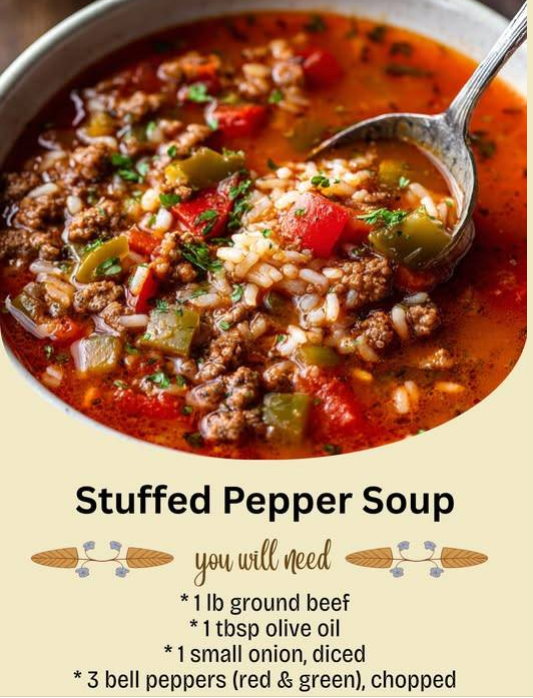
Following the assembly instructions is not just about order; it is about heat management. Each step is designed to maximize the release of essential oils and the caramelization of sugars.
Step 1: The Protein Foundation
In a heavy-bottomed Dutch oven, brown the ground beef over medium-high heat. Do not overcrowd the pan; you want to sear the meat, not steam it. Once fully cooked, drain approximately 80% of the rendered fat. Leaving a small amount of “liquid gold” ensures the vegetables in the next step have a savory medium to cook in.
Step 2: The Aromatic Sweating
Add your diced onions. Sauté for 4 minutes until translucent. Add the minced garlic during the final 60 seconds. Garlic contains allicin, which provides that signature aroma but burns easily—adding it too early creates a bitter profile that ruins the soup base.
Step 3: Pepper Integration
Add the chopped bell peppers. Unlike the baked version where peppers are steamed, here they are sautéed. This allows the natural sugars in the peppers to caramelize slightly before the liquid is added, adding a “roasted” depth to the final product.
Step 4: The Simmering Marriage
Pour in the tomatoes, sauce, and beef broth. Bring to a rolling boil, then immediately reduce to a low simmer. Cover the pot. This period of 15–20 minutes is where the osmostic exchange occurs—the beef releases flavor into the broth, while the peppers absorb the acidity of the tomatoes.
Step 5: The Final Starch Infusion
Stir in the pre-cooked rice just before serving. Adding raw rice to the simmering pot is a common error; it will absorb too much liquid and release excess starch, turning your soup into a thick, gluey porridge. By adding cooked rice at the end, the grains remain distinct and tender.
Serving and Storage: Post-Production Management
Serving this soup is an exercise in contrast. Top each bowl with a handful of sharp cheddar or freshly grated parmesan. The saltiness of the cheese cuts through the rich tomato base. Pair with a thick slice of sourdough or “crusty bread” to act as a vehicle for the broth.
Storage Guidelines
| Storage Method | Duration | Notes |
|---|---|---|
| Refrigerator | 3–5 Days | Flavor improves as the aromatics mellow overnight. |
| Freezer | 3 Months | Freeze without the rice for the best texture upon thawing. |
Tips: The Professional’s Secrets
To elevate this from a simple soup to a culinary event, keep these three regulatory tips in mind:
- The Acid Squeeze: Just before serving, add a teaspoon of balsamic vinegar or a squeeze of fresh lemon. This “wakes up” the tomato flavors that can become muddy during the simmer.
- Pepper Uniformity: Dice your peppers to the size of a nickel. This ensures they fit perfectly on a spoon alongside the beef and rice for a balanced bite.
- Salt Timing: Only salt at the very end. As the soup simmers and reduces, the salt concentration increases. Salting early often leads to an over-seasoned dish.
Variations: Adapting for Modern Palates
The beauty of this soup infrastructure is its adaptability. In 2026, we see several “regulatory” deviations that work exceptionally well:
- The Low-Carb Alternative: Swap the rice for riced cauliflower. Add it in the last 5 minutes of cooking—it provides the same texture without the glycemic load.
- The Spicy Kick: Add two diced jalapeños (seeds removed) and a teaspoon of smoked paprika for a southwestern flair.
- The Plant-Based Swap: Use plant-based crumbles and vegetable broth. The high acidity of the tomatoes makes the transition nearly indistinguishable from beef.
Tips: Texture and Consistency
If you prefer a thicker, stew-like consistency, remove one cup of the soup (before adding rice) and blend it with a tablespoon of tomato paste, then stir it back in. This creates a natural thickener that doesn’t rely on flour or cornstarch, keeping the flavor pure and the texture velvety.
Conclusion: The Soul of the Dutch Oven
Stuffed Pepper Soup is more than just a convenient dinner; it is a masterclass in how to modernize classic flavors without losing their heritage. By respecting the browning process, managing your starches carefully, and balancing acidity, you create a dish that is nutritionally complete and emotionally satisfying. It stands as a testament to the fact that sometimes, breaking things down (deconstruction) is the best way to build them back up into something better.
Frequently Asked Questions
A: You can, but it is risky. Rice absorbs a massive amount of liquid. If you choose this route, add an extra 2 cups of broth and be prepared to eat the soup immediately, as it will turn into a “stew” as it sits.
A: A mixture is best. Green peppers provide a slightly bitter, “earthy” note that balances the sweetness of red and orange peppers.
A: This happens if the beef wasn’t drained properly. If the soup is already made, you can “skim” the oil off the top with a wide spoon or a piece of bread.
A: Absolutely. Use a 93/7 blend and add a teaspoon of Worcestershire sauce to mimic the depth of beef.
Would you like me to create a “Garnish Guide” to help you choose the best cheeses and herbs for this soup, or perhaps a sourdough bread recipe to serve on the side?