
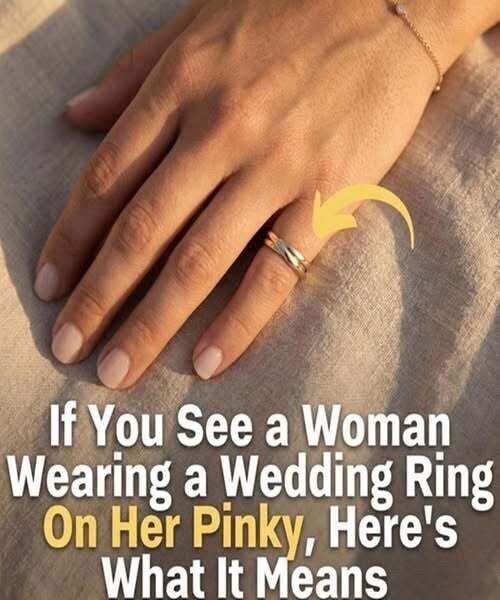
In a world where jewelry often conveys societal expectations, the pinky ring emerges as a powerful symbol of personal expression and autonomy. Historically, rings have communicated values and commitments, but the pinky ring challenges traditional narratives surrounding identity and worth. This article explores the evolving significance of pinky rings, particularly among women, and how they represent a shift towards self-empowerment and personal milestones.
The Historical Significance of Rings
For much of recorded history, rings have operated as a visual language through which societies communicated values, hierarchies, and expectations. Long before written contracts or public declarations were common, a ring could convey allegiance, legitimacy, or obligation in an instant. Its circular form suggested continuity and permanence, making it an ideal symbol for promises meant to endure. Over time, this symbolism became deeply embedded in cultural rituals surrounding love, inheritance, power, and belonging.
The Rise of the Pinky Ring
The ring finger emerged as a particularly charged site, tied to myths about veins leading directly to the heart, reinforced by religious doctrine, and normalized through generations of repetition. Eventually, the meaning of rings narrowed, becoming heavily concentrated around romantic partnership and marital status. To wear a ring in a certain way was to signal not just personal choice, but social position. Against this backdrop, the growing presence of women wearing rings on their pinky fingers represents a subtle but meaningful disruption. It redirects attention away from the finger most burdened by expectation and toward one that has historically existed on the periphery of convention.
The Symbolism of the Pinky Finger
The pinky finger itself occupies a unique symbolic position, one that helps explain why it has become such a compelling site for reinterpretation. In many philosophical and astrological traditions, the pinky has been associated with communication, intuition, intelligence, and personal expression. Unlike the ring finger, which has been socially assigned a single dominant meaning, the pinky has remained relatively unclaimed by rigid ritual. This lack of imposed symbolism makes it fertile ground for personal meaning.
