
The Fiesta Architecture
Molecular Starch Coating & Lipid Emulsions in 2026
Introduction: The Geometry of the Crunch
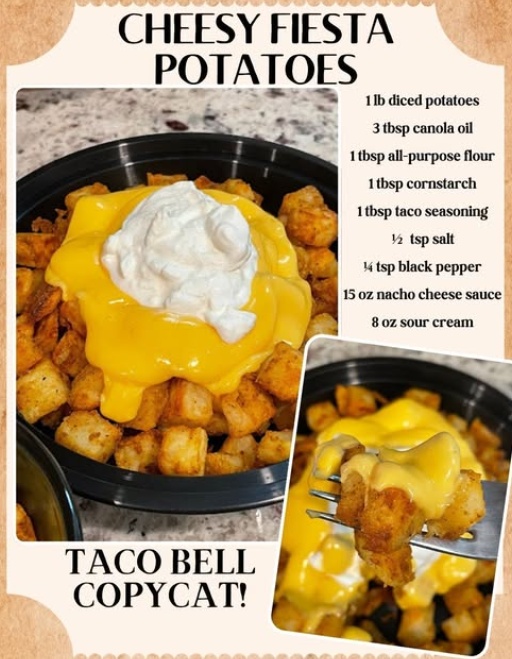
In the culinary science of 2026, the Cheesy Fiesta Potato is defined by its Adhesion Coefficient. The challenge is to maintain a crisp potato exterior while subjecting it to a high-moisture nacho cheese environment. We solve this through Starch Layering. By coating the diced potatoes ($Solanum tuberosum$) in a mixture of flour and cornstarch, we create a microscopic “scaffolding” that protects the interior starch from becoming gummy.
This masterclass provides the regulatory framework for achieving the precise texture and flavor profile of the Taco Bell original, focusing on amylopectin stabilization and lipid-based top-notes.
The Component Matrix
The Structural Ingredients
- 1lb Diced Potatoes: Use Russet for maximum starch content and a fluffy interior.
- 1 tbsp Cornstarch & 1 tbsp Flour: The “Dual-Starch” system. Cornstarch provides “glassy” crispness, while flour provides “Maillard browning.”
- 1 tbsp Taco Seasoning: Contains the capsaicin and cumin aromatics.
- 3 tbsp Canola Oil: The thermal conductor. Its high smoke point allows for rapid surface dehydration.
- Nacho Cheese & Sour Cream: The finishing emulsions.
The Science of Double-Starch Crispness
Amylose vs. Amylopectin
Potatoes are high in amylopectin. When heated, this starch becomes soft. By adding Cornstarch (which is pure amylose), we create a barrier. Amylose molecules are long and linear; they wrap around the potato cube and “set” into a rigid, crispy shell when they hit hot oil.
[Image of the molecular structure of amylose versus amylopectin]
This prevents the cheese sauce from soaking into the potato skin and making it soggy.
