
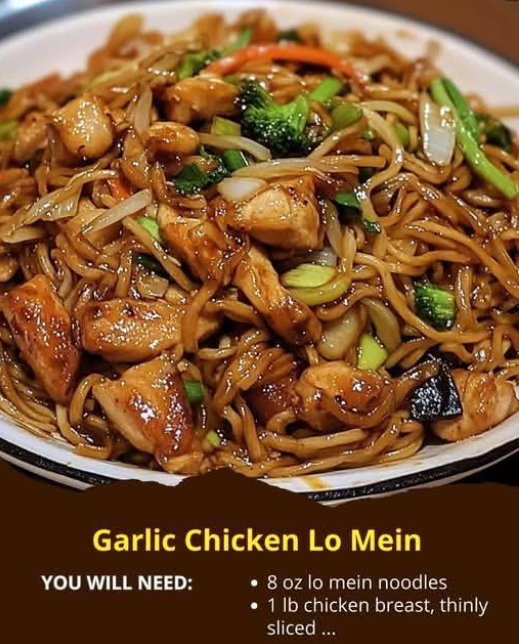
Step 1: Noodle Prep
Cook the lo mein noodles in boiling water according to the package instructions. Be careful not to overcook them; you want a slight “bite” (al dente). Drain and set aside. Pro Tip: Toss the drained noodles with a tiny drop of oil to keep them from sticking together while you cook the rest.
Step 2: Searing the Protein
Heat 1 tablespoon of vegetable oil in a large skillet or wok over medium-high heat. Add the chicken strips in a single layer. Let them sear undisturbed for 2 minutes to get a golden-brown crust, then toss until fully cooked. Remove the chicken from the wok and set aside on a plate.
Step 3: The Aromatic Sauté
Add the remaining tablespoon of oil to the wok. Toss in the minced garlic and sauté for only 30-60 seconds. You want it fragrant but not burnt. Immediately add your carrots, bell peppers, and broccoli. Stir-fry for 3-4 minutes until the colors are vibrant and the vegetables are “tender-crisp”—meaning they are cooked through but still have a snap.
Step 4: The Sauce Synergy
In a small bowl, whisk together the soy sauce, oyster sauce, hoisin sauce, and sesame oil. This ensures an even distribution of flavor once it hits the hot pan.
Step 5: The Grand Reunion
Return the cooked chicken and the noodles to the wok. Pour the sauce over the top. Using tongs or a large spatula, toss everything together over high heat for 2-3 minutes. This allows the noodles to absorb the sauce and the whole dish to reach a uniform temperature.
Step 6: Final Seasoning
Taste the noodles before serving. Add a pinch of salt or pepper if needed. Garnish heavily with sliced green onions.
Serving and Storage
Serving: Serve in deep bowls while steaming hot. For those who like a kick, provide a side of chili garlic sauce or sriracha.
Storage: Lo mein is one of the few stir-fries that actually tastes great the next day. Store in an airtight container in the fridge for up to 3 days. Reheating: Add a teaspoon of water or chicken broth before microwaving to help re-hydrate the noodles and loosen the sauce.
Tips: Perfecting the Chicken Texture
- The “Velveting” Secret: For ultra-tender chicken like in restaurants, toss your raw chicken strips in a teaspoon of cornstarch and a splash of soy sauce 15 minutes before cooking. This creates a protective barrier that keeps the juices inside.
- Uniform Slicing: Make sure your chicken and vegetables are sliced to a similar size. This ensures that everything cooks at the same speed, preventing raw chicken and mushy carrots.
Variations: Beyond the Chicken
- Shrimp Lo Mein: Swap the chicken for large, deveined shrimp. Shrimp cook very fast (about 2 minutes per side), so add them back in at the very end.
- Vegetarian Delight: Omit the chicken and double the vegetable portions. Add sliced mushrooms and baby corn for extra heartiness, and use a vegetarian mushroom-based “oyster” sauce.
- Spicy Garlic: Add 1 teaspoon of red pepper flakes or a tablespoon of Sambal Oelek to the sauce mixture for a fiery version.
Tips: Managing the Wok
- Don’t Crowd the Pan: If you are doubling the recipe, cook in two batches. Too many ingredients in the wok at once will drop the temperature, causing the food to steam rather than sear.
- Dry the Noodles: Ensure your noodles are well-drained. Any excess water will dilute the sauce and prevent that beautiful glossy coating from adhering to the noodles.
Conclusion: A New Weekly Favorite
Garlic Chicken Lo Mein is the perfect entry point for anyone looking to master the art of the stir-fry. It is a forgiving, fast, and flavor-dense meal that satisfies that specific craving for savory Chinese-American comfort food. By using fresh garlic and a high-heat technique, you bring out a depth of flavor that is simply unattainable with slower cooking methods. Next time you’re tempted to order in, remember that a world-class Lo Mein is only a few minutes of stir-frying away. Grab your wok and enjoy the sizzle!
Frequently Asked Questions
- Can I use frozen vegetables?
- Yes, but make sure they are fully thawed and patted dry. Frozen vegetables release a lot of water, which can make the sauce runny if not handled correctly.
- What is Hoisin sauce?
- Hoisin is a thick, fragrant sauce made from fermented soybeans, garlic, vinegar, and five-spice powder. It provides the “sweet and savory” backbone to the Lo Mein sauce.
- Can I use whole wheat noodles?
- Certainly. Whole wheat noodles have a nuttier flavor and more fiber. Just be aware they may require a few extra minutes of boiling time compared to standard egg noodles.
Would you like me to create a 10-minute appetizer recipe like Egg Rolls or Potstickers to serve with this Lo Mein, or perhaps a guide on how to choose the best Wok for your stove?
Related posts:
 Wok Excellence: Mastering the Sizzling Garlic Chicken Stir-Fry
 The Ultimate Sizzler: Mastering Chinese Pepper Steak with Onions
 Egg Fried Rice: The Ultimate Guide to Wok Hei
 Egg Roll Stir Fry – All the Flavor, None of the Wrapping!
 The Gilded Wok: Mongolian Ground Beef Noodles
 Engineering the Perfect Beef and Broccoli Stir-Fry
