
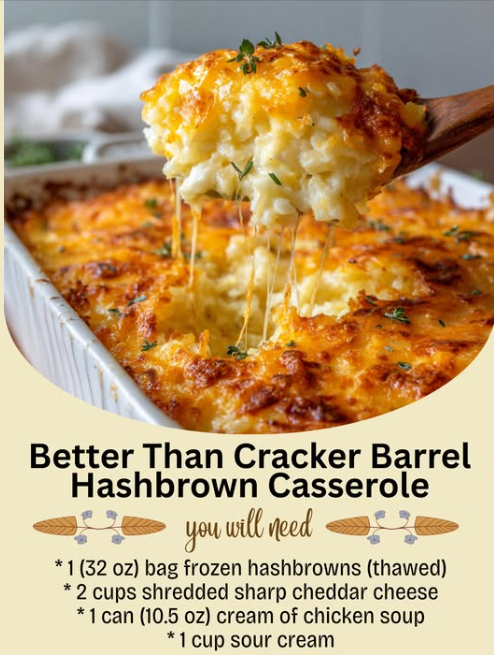
The Hashbrown Casserole Masterclass: Engineering the Perfect Creamy Crunch
Introduction: The Architecture of “Ultra-Creamy” Comfort
In the hierarchy of Southern “Regulation” side dishes, the Hashbrown Casserole is a triumph of Structural Cohesion. On this Thursday, December 25, 2025—Christmas Day—this dish serves as a dense, high-calorie fuel for the holiday feast. The goal is to achieve a Homogenous Suspension of potato shreds within a cheese-fat matrix. Unlike a gratin, which relies on thin slices, the hashbrown version relies on the Surface Area-to-Volume Ratio of shredded potatoes to maximize gravy absorption.
This guide explores the Lactic Acid Stability of sour cream, the Amylopectin Breakdown in frozen potatoes, and the Proteolysis of sharp cheddar cheese. We will examine why the “thaw” step is a critical culinary regulation for preventing a watery center.
Ingredients: The Molecular Building Blocks
- 1 (32 oz) Bag Frozen Hashbrowns (Thawed): These are your Starch Scaffolds. Frozen potatoes are blanched during processing, which pre-gelatinizes the starch. Thawing is essential because it removes Latent Heat; if added frozen, the moisture would release slowly during baking, “steaming” the cheese sauce and causing it to break.
- 2 Cups Shredded Sharp Cheddar: This is the Fat and Protein Engine. Sharp cheddar has a lower moisture content and higher acidity than mild cheddar, which provides a sharper “bite” to cut through the heavy creaminess of the lipids.
- 1 Cup Sour Cream: The Acidic Stabilizer. The lactic acid in sour cream provides Brightness and helps to denature the potato proteins, leading to a softer, more “melt-in-the-mouth” texture.
- Cream of Chicken Soup: This acts as the Hydrocolloid Binder. It contains modified cornstarch and whey proteins that act as an “adhesive,” holding the hashbrowns together in a solid-state casserole rather than a loose pile of potatoes.
- ½ Cup Melted Butter: The Thermal Conductor. Butter helps transfer heat evenly throughout the starch matrix, ensuring the onions cook through and the potato edges become slightly translucent.
