
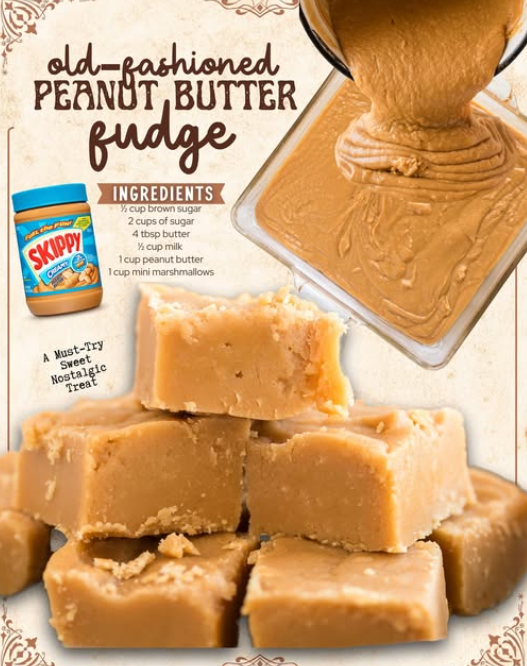
1. Preparation of the Mold
Line an 8×8 inch square baking pan with parchment paper or aluminum foil, leaving an overhang on the sides. Lightly grease the foil with butter. In candy making, speed is essential once the mixture leaves the heat, so having your pan ready is a vital regulation.
2. The Controlled Boil
In a heavy-bottomed saucepan, combine the white sugar, brown sugar, milk, and butter. Bring the mixture to a boil over medium heat, stirring constantly. Once it reaches a rolling boil, stop stirring and let it cook for exactly 2 to 3 minutes. If you have a candy thermometer, you are looking for the “soft ball” stage (approx. 112°C or 234°F).
3. The Flavor Integration
Remove the saucepan from the heat immediately. Rapidly stir in the peanut butter and the mini marshmallows. Continue to stir vigorously until the marshmallows have completely melted and the mixture is glossy and uniform.
4. The Pour and Set
Pour the hot fudge into your prepared pan. Use an offset spatula to smooth the top quickly before it begins to firm up. Let the fudge sit at room temperature for at least 2 hours, or until it is completely cool and firm to the touch.
5. Slicing the Perfection
Using the parchment overhang, lift the block of fudge out of the pan. Place it on a cutting board and use a long, sharp knife to slice it into small, rich squares.
Serving and Storage: Maintaining the Creaminess
Serving: Fudge is a concentrated treat; serve in 1-inch squares. It pairs exceptionally well with dark coffee, which cuts through the intense sweetness.
Storage: To prevent the fudge from drying out or absorbing “fridge flavors,” wrap it tightly.
| Environment | Container Type | Shelf Life |
|---|---|---|
| Room Temp | Airtight Container | 1 Week |
| Refrigerator | Wrapped in Wax Paper | 2-3 Weeks |
| Freezer | Double Wrapped | 3 Months |
Tips: The Secret to “Grain-Free” Fudge
- The “Wash Down” Technique: If sugar crystals form on the sides of your pot during the boil, use a wet pastry brush to wash them down. A single stray crystal can cause the entire batch to turn grainy.
- Don’t Over-Boil: If you boil the mixture too long, the fudge will become crumbly and dry. Stick strictly to the 3-minute limit if not using a thermometer.
- Quality Peanut Butter: Use a brand name like Jif or Skippy for this recipe; the stabilizers in these brands help the fudge set consistently.
Variations: Customizing the Nostalgia
While the classic is hard to beat, you can easily adapt this base:
- The Crunchy Twist: Use extra-crunchy peanut butter instead of creamy for added texture.
- Chocolate Marbled: Drizzle ½ cup of melted semi-sweet chocolate over the top and swirl it in with a knife before it sets.
- Nutty Deluxe: Stir in ½ cup of chopped roasted peanuts along with the marshmallows for a “double peanut” experience.
Tips: Troubleshooting Your Batch
“My fudge didn’t set”: This means the mixture didn’t reach a high enough temperature. You can sometimes “save” it by using it as a decadent ice cream topping!
“The mixture seized”: This usually happens if the peanut butter is added while the sugar is still over active heat. Always remove from the burner before adding the final ingredients.
Conclusion: A Timeless Kitchen Victory
Mastering Old Fashioned Peanut Butter Fudge is a rewarding skill that connects you to the bakers of the past. By following these temperature and stirring regulations, you create a treat that is vastly superior to any store-bought alternative. It is creamy, nostalgic, and—as many have discovered over the years—completely addictive.
Frequently Asked Questions:
Q: Can I use evaporated milk instead of regular milk?
A: Yes! Evaporated milk will actually make the fudge even creamier due to its lower water content.
Q: Why use marshmallows?
A: Marshmallows contain corn syrup and gelatin, which inhibit sugar crystallization, helping you achieve that perfect “never-grainy” texture every time.
Q: Can I half the recipe?
A: Yes, but use a smaller loaf pan to ensure the fudge maintains its height. Thick fudge is always more satisfying than thin fudge!
Related posts:
 Mastering Paula Deen’s 5 Minute Fudge
 Holiday Magic: The Ultimate Guide to Two-Ingredient No-Bake Fudge
 Mastering Old-Fashioned Chocolate Fudge
 The Art and Science of Oklahoma Nut Candy: A Confectionery Masterclass
 Confectionery Chemistry: Mastering No-Bake Banana Fudge
 Peanut Butter Microwave Fudge: A 15-Minute Modern Miracle
