
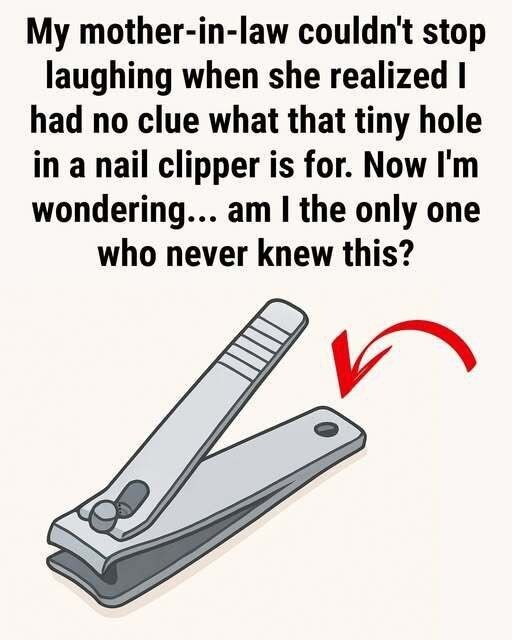
A Design Rooted in History
The small hole in a nail clipper is not a modern invention; its origins trace back to the late 1800s, a time when personal grooming tools became more widely accessible.
During that era, nail clippers were considered refined accessories, often carried by both men and women, much like pocket watches or small combs. The hole allowed the clipper to be attached to a chain or decorative holder, ensuring it was always within reach.
These early grooming tools were built for durability and daily use. The hole was not merely decorative; it was a practical solution for individuals who valued preparedness and personal presentation.
Why the Hole Never Disappeared
Over the years, nail clippers have evolved, with some now featuring built-in files, catchers for nail trimmings, or even multi-purpose capabilities. Manufacturing methods and materials have improved, yet the small hole has remained.
This consistency speaks volumes. In product design, features that serve no purpose are often eliminated over time. The fact that this hole persists indicates it continues to offer value.
Manufacturers recognize that users appreciate tools that feel familiar and reliable. The hole represents a design philosophy that prioritizes long-term usefulness over fleeting trends.
Everyday Tools That Reflect Thoughtful Living
For many older adults, there is comfort in tools that simply work. There is satisfaction in objects that do not require constant replacement or explanation. The nail clipper exemplifies this mindset.
Its small hole serves as a reminder that good design does not need to be complicated. It should understand real life and anticipate small frustrations, quietly removing them.
When you notice this detail, you may begin to see similar thoughtfulness in other everyday items. Hooks, loops, and simple attachments often exist for reasons rooted in real human experience.
In conclusion, the small hole in a nail clipper is more than just a design quirk; it embodies practicality and thoughtful engineering. This simple feature enhances usability, promotes organization, and connects us to a rich history of grooming tools. By appreciating such details, we can cultivate a deeper understanding of the design elements that improve our daily lives.
Related posts:
 Essential Nutrients for Stronger, Healthier Nails
 Unveiling the Mystery of the Darning Mushroom: A Vintage Sewing Essential
 The Ingenious Design of the Circular Dent in Milk Jugs
 The Surprising Truth About Eating Eggs Every Day
 10 Early Signs of Dementia You Should Never Ignore
 14 Signs of Liver Damage You Should Not Ignore
