
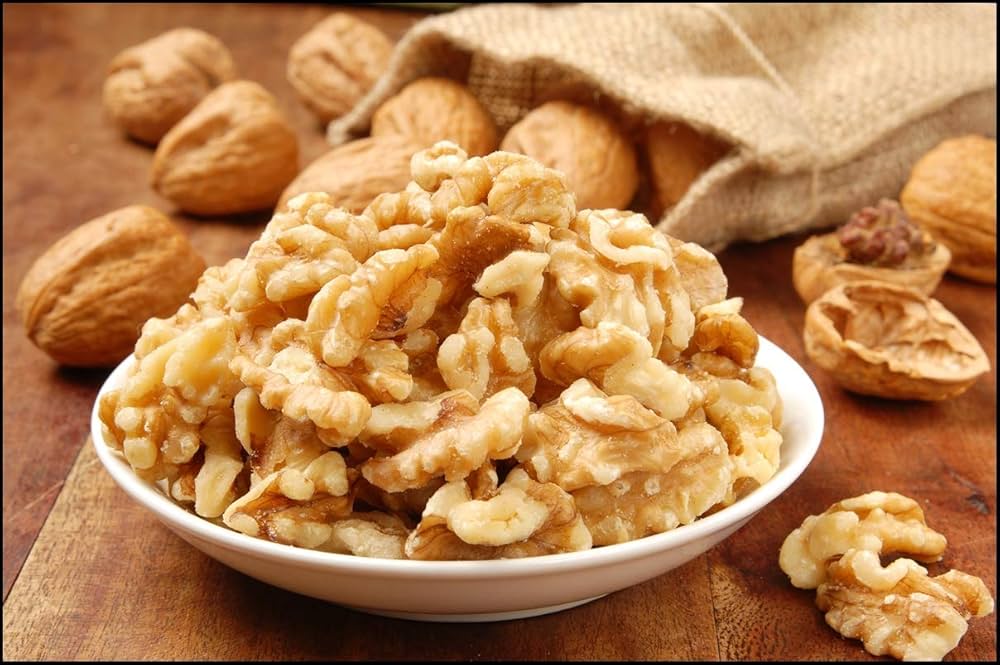
Walnuts are not just a tasty snack; they are a nutritional powerhouse packed with health benefits that can significantly enhance your well-being. These crunchy nuts are rich in antioxidants, essential fatty acids, and a variety of vitamins and minerals. Regularly consuming walnuts can lead to improvements in brain function, heart health, and even weight management. Let’s explore the science-backed advantages of walnuts and how you can easily add them to your daily routine.
What Are Walnuts?
Walnuts are the edible seeds of trees from the Juglans genus, primarily the Persian or English walnut and the black walnut. They grow inside a hard shell that must be cracked open to reveal the uniquely shaped, wrinkly lobes within. A thin brown skin covers the edible kernel, which is crucial for the nut’s nutritional value.
Due to their high oil content, walnuts are prone to spoilage if not stored correctly. To maintain freshness, shelled walnuts should be kept in an airtight container in the refrigerator for up to six months or frozen for up to a year. Unshelled walnuts should be stored in a cool, dry, and dark place for similar durations.
Nutritional Profile and Key Benefits
The impressive nutritional profile of walnuts is a key reason for their acclaim. A 1-ounce serving (about 14 walnut halves) contains 185 calories, 4.3 grams of protein, and nearly 2 grams of dietary fiber. With a low glycemic index, they serve as an excellent snack for sustained energy.
Walnuts are particularly notable for their unique combination of polyunsaturated fatty acids, specifically omega-6 (linoleate) and omega-3 (linolenate). They are one of the richest plant-based sources of omega-3s, with a single serving providing 2.57 grams of alpha-linolenic acid (ALA). These healthy fats contribute significantly to the cardiovascular benefits of walnuts.
In addition to healthy fats, walnuts are an excellent source of essential vitamins and minerals. A quarter-cup (approximately 30 grams) provides 50% of your daily manganese needs, 23% of copper, 11% of magnesium, and nearly 5% of iron.
