
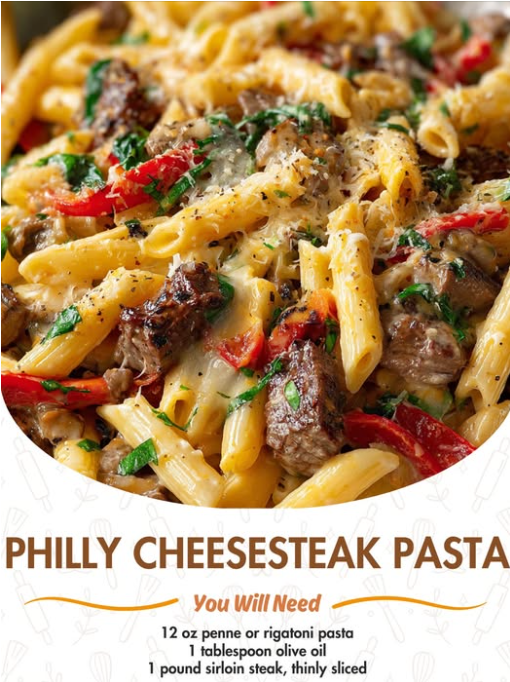
- The Pasta Prep: Boil the pasta in salted water until 1 minute before al dente. Reserve 1/2 cup of the pasta water before draining.
- The High-Heat Sear: Heat olive oil in a large skillet over high heat. Add the sirloin strips in a single layer. Sear for 1-2 minutes until browned but slightly pink inside. Remove and set aside.
- The Vegetable Sweat: In the same pan (don’t wash it!), add the peppers, onions, and mushrooms. Sauté until the onions are translucent and the peppers are tender-crisp. Add the garlic for the last 30 seconds.
- The Deglaze: Pour in the beef broth. Use a wooden spoon to scrape the fond (the brown bits) off the bottom of the pan—this is where the concentrated flavor lives.
- The Emulsion: Lower the heat. Stir in the heavy cream and the cheese. Whisk until the sauce is smooth and bubbling.
- The Final Assembly: Return the steak and the cooked pasta to the skillet. Toss thoroughly. If the sauce is too thick, add the reserved pasta water 1 tablespoon at a time until the sauce is glossy and coats everything evenly.
Serving and Storage
This pasta is best served immediately while the cheese is at its maximum elasticity.
Storage Table:
| Method | Longevity | Note |
|---|---|---|
| Refrigerator | 3 Days | The pasta will absorb the sauce; add a splash of milk when reheating. |
| Freezer | Not Recommended | Cream-based cheese sauces often separate and become “grainy” when frozen. |
Tips for Professional Results
“To get the steak as thin as a real Philly shop, wrap the sirloin in plastic and freeze it for 30 minutes. This firms up the fat and muscle, allowing you to shave it into paper-thin ribbons.”
- Salt Regulation: Beef broth and cheese are both salty. Taste the sauce before adding any extra salt.
- The Grain: Always slice the steak against the grain. This shortens the muscle fibers, making the beef literally “melt in your mouth.”
- Color Matters: Don’t crowd the pan when searing the steak. If you add too much at once, the meat will steam instead of sear, and you’ll lose that vital crust.
Variations: Making it Your Own
- The “Wit” Style: Double the onions and add a dash of Worcestershire sauce for a deeper, more savory punch.
- The Spicy Philly: Add sliced pickled cherry peppers or jalapeños to the vegetable sauté.
- The Low-Carb Swap: Replace the pasta with roasted cauliflower florets or zucchini noodles.
Conclusion
The Philly Cheesesteak Pasta is a testament to the fact that comfort food doesn’t have to be complicated to be brilliant. By focusing on the regulation of the sear and the emulsification of the sauce, you’ve turned a sandwich shop staple into a gourmet family dinner. We hope this dish brings a bit of Philadelphia soul to your 2026 table. Enjoy every savory, cheesy bite!
Frequently Asked Questions
- Can I use a different cut of beef?
- Ribeye is the traditional choice for cheesesteaks and is even more flavorful, but sirloin is a fantastic, leaner alternative for a weekday pasta.
- What if my sauce is too thin?
- Let it simmer for 2-3 extra minutes without the lid. The evaporation will naturally thicken the cream and cheese.
- Can I use “Cheez Whiz”?
- If you want the absolute “tourist” Philly experience, yes! Stir in 1/2 cup of Whiz at the end instead of shredded cheese for that specific yellow-gold glow.
Related posts:
 The Ultimate Philly Steak Cheese Fries
 Dinner or Breakfast Perfection: Mastering Steak & Eggs
 The Ultimate Guide to Steak & Cheese Quesadillas
 Mastering Cheesesteak Garlic Bread
 Garlic-Butter Steak Bites Over Creamy Parmesan Pasta
 The Ultimate Comfort Meal: Warm Church-Supper Philly Cheese Steak Casserole
