
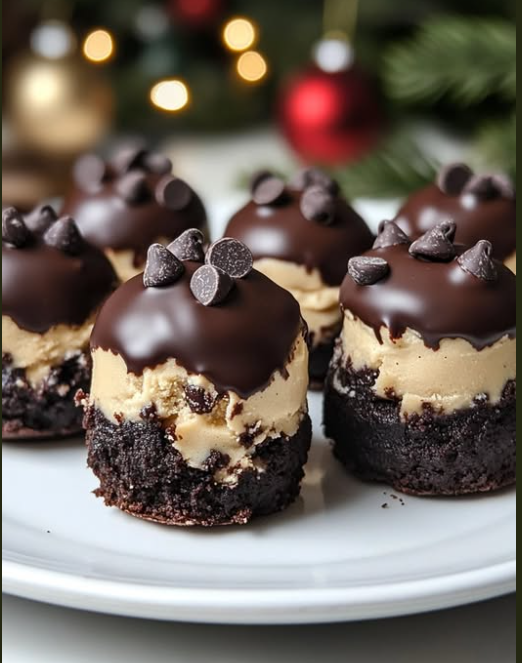
The No-Bake Confection: Mastering Peanut Butter Snowballs
Introduction: The Geometry of the Peanut Butter Core
The **Chocolate Peanut Butter Snowball** is a cherished holiday confection where the absence of baking elevates the importance of texture and temperature control. The goal is a center that is tender yet firm, capable of holding a perfect spherical shape without being sticky, and a chocolate shell that is glossy and crisp.
The structure of the center is built entirely on the interaction between fat and powdered sugar. The recipe strictly calls for **1 cup of creamy peanut butter (not natural style)**. The stability of commercial peanut butter (which uses stabilizers like hydrogenated oils) is mandatory here. Natural peanut butter, which separates into oil and solids, is too fluid and will not bind the sugar effectively, resulting in a grainy, oily, and unstable dough.
The binding agent is **1 ½ to 2 cups of powdered sugar, sifted**. Sifting is a non-negotiable step: powdered sugar is prone to clumping, and those lumps, if not removed, will result in a gritty final texture. The ratio of sugar to the fats (peanut butter and **2 tablespoons of melted butter**) determines the final consistency. The dough must be worked until it reaches the **Play-Doh stage**—a firm but pliable mass that holds its shape when rolled. Adding the powdered sugar gradually allows the confectioner to stop precisely when this consistency is reached, avoiding a dry, crumbly mixture or a sticky, difficult-to-roll dough.
The essential technical regulation in this recipe is the **double chilling process**. The peanut butter balls must be chilled until solid *before* being dipped in chocolate (the first chill). This cold interior acts as a thermal buffer, quickly cooling and setting the melted chocolate upon contact. If the peanut butter is soft, its warmth will melt the chocolate, leading to a thin, uneven coating and a high risk of “blooming”—a gray, streaky appearance caused by the cocoa butter fat separating and re-crystallizing poorly.
The final touch, the **caramel drizzle**, must be executed smoothly. Homemade caramel requires temperature precision, while store-bought caramel must be thinned slightly to achieve an elegant, flowing drizzle rather than a thick, clumpy ribbon. The entire confectionery process is a rapid-fire sequence of mixing, chilling, dipping, and cooling, requiring the baker to move quickly, especially in the dipping phase.
