
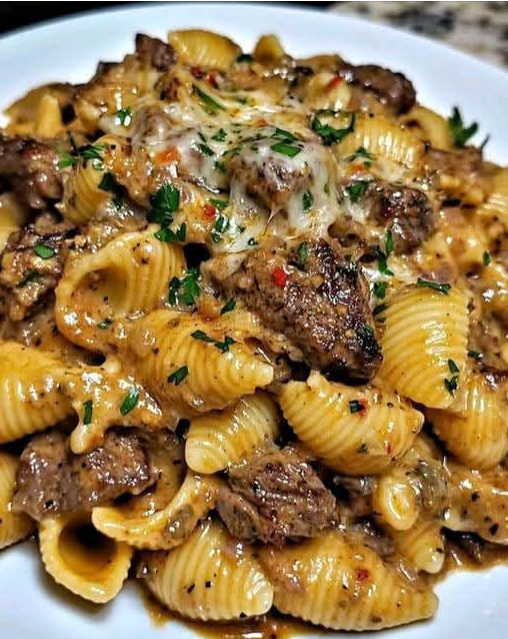
Phase 1: Hydration of the Starch Substrate
Boil the shells in heavily salted water (approx. 1% salinity). Remove 1 minute before the “Al Dente” threshold. Crucial: Reserve 1/2 cup of pasta water. This liquid contains Amylose Starch, which acts as a bridge between the watery sauce and the fatty cream.
Phase 2: Protein Carbonization
Heat olive oil in a skillet until it reaches the Smoke Point. Sear steak pieces in a single layer. Do not crowd the pan; this prevents “steaming” and ensures the Maillard Reaction occurs. Remove steak once a brown crust forms, leaving the internal temperature at a medium-rare state.
Phase 3: Lipid-Aromatic Infusion
In the same pan, sauté onions and garlic. Add the paprika. Heating the paprika in oil is a process called “Blooming”; it dissolves the fat-soluble flavor compounds, intensifying the taste and ensuring the sauce achieves a vibrant orange-red hue.
Phase 4: Emulsion Assembly
Pour in heavy cream and the reserved pasta water. Simmer until the volume reduces by 20%. Stir in Parmesan cheese until the Colloidal Suspension is smooth. Re-introduce the steak and the shells. Toss vigorously for 60 seconds to allow the starch on the pasta to bind with the fats in the cream.
4. Service and Storage: Post-Reduction Management
Dairy-based sauces are highly sensitive to Thermal Evaporation. If the sauce becomes too thick during service, add a tablespoon of hot water to restore the Fluidity Gradient.
| State | Consistency Observation | Stability Limit |
|---|---|---|
| Fresh (Hot) | Glossy; shells are fully coated. | Peak sensory quality. |
| Refrigerated | Fats solidify; starch absorbs sauce. | 3 Days. |
| Reheated | Potential for “breaking” (oil separation). | Reheat with a splash of milk. |
5. Tips: Managing the Sensory Profile
- The Resting Phase: Allow the steak to rest for 3 minutes before adding it back to the sauce. This prevents the “bleeding” of myoglobin, which can turn the creamy sauce a muddy gray color.
- Paprika Gradient: For more depth, use 1 tbsp of Sweet Paprika and 1 tbsp of Smoked Paprika. This balances the sugar content of the pepper with the phenolic smoke compounds.
Conclusion: The Mastered Emulsion
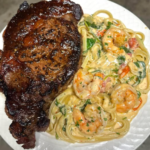
Creamy Paprika Steak Shells represent a triumph of One-Pan Engineering. By leveraging the steak’s fond and the pasta’s starch, you create a self-thickening system that is both efficient and indulgent. Master the sear and the bloom, and you master the meal. Enjoy the results!
Frequently Asked Questions
Q: Why did my sauce “curdle” or look grainy?
A: This usually happens if the heat was too high when the Parmesan was added. Cheese proteins can clump if hit with boiling heat. Lower the temperature before stirring in the cheese.
Q: Can I use milk instead of heavy cream?
A: You can, but you will need a Thickening Agent (like a flour roux). Milk has a higher water-to-fat ratio and will not achieve the same “clinging” viscosity as heavy cream.
Would you like me to provide a recipe for a “Garlic-Herb Focaccia” to serve on the side, or perhaps show you how to turn this into a “Spicy Cajun” variation?
Related posts:
 Dinner or Breakfast Perfection: Mastering Steak & Eggs
 The Ultimate Guide to Steak & Cheese Quesadillas
 Garlic-Butter Steak Bites Over Creamy Parmesan Pasta
 Million Dollar Indulgence: Chicken Alfredo Stuffed Shells
 The Ultimate Comfort Fusion: Sloppy Joe Stuffed Shells
 A Masterclass in Creamy Steak and Shrimp Pasta
