
Step 1: Dry Caramelization
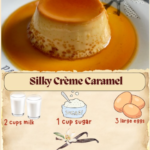
Place the sugar in a heavy-bottomed pan over low heat without water. The “Glass Transition” Secret: As the sugar melts and reaches approximately 160°C, it turns golden. Pour it immediately into your mold. As it cools, it transitions into an amorphous solid (glass-like state). This layer will eventually dissolve during the chilling process to form the signature sauce.
Step 2: The Low-Shear Emulsion
Combine milk, eggs, sugar, and vanilla in a blender. Pulse for only 10–15 seconds. The “Air Entrainment” Warning: Excessive blending introduces air bubbles into the matrix. In the oven, these bubbles expand, creating unsightly holes in the finished custard. A short pulse ensures homogeneity without unnecessary aeration.
Step 3: Thermal Insulation (The Water Bath)
Gently pour the liquid over the hardened caramel. You must use a Bain-Marie (water bath) for the cooking process.
- Stovetop Method: Place the mold in a pot with hot water reaching halfway up the sides. Cover and cook for 30–35 minutes.
- Oven Method: Bake at 180°C (350°F) for 35–40 minutes in a tray filled with hot water.
The Physics: Water acts as a thermal buffer, capping the temperature at 100°C (boiling point), which prevents the internal custard temperature from reaching the “boiling” stage that causes holes.
Step 4: The Cooling and Setting Phase
Allow the mold to reach room temperature before refrigerating for at least one hour (ideally 4+ hours). This allows for Starch/Protein Retrogradation, where the bonds strengthen into a firm, sliceable mold.
Service and Storage: Protecting the Structural Integrity
Service: To unmold, run a thin knife around the edge. Invert the plate over the mold and flip quickly. The “Hydrostatic” Secret: The sauce that was once solid caramel has turned into a liquid through osmotic pull from the custard’s moisture.
Storage: Store in the refrigerator for up to 3 days. Ensure it is covered to prevent the absorption of refrigerator odors, as high-fat dairy is particularly susceptible to aromatic contamination.
Variants: Structural and Methodological Evolutions
| Variation | Modification | Result |
|---|---|---|
| The Microwave Rapid-Set | Cook on 50% power for 5-7 minutes. | Fastest method; requires high vigilance to prevent boiling. |
| The Egg-Free Gel | Use Agar-Agar or Cornstarch as a thickener. | Ideal for those with allergies; creates a “pudding” rather than a custard. |
| Rich Cream Infusion | Replace 1/2 cup of milk with heavy cooking cream. | Increases the lipid concentration for a denser, more luxurious mouthfeel. |
Tips: Pro-Level “Better Than a Restaurant” Nuances
- The “Sifting” Mandate: Pour your blended liquid through a fine-mesh strainer into the mold. This removes any unblended egg chalazae or large bubbles, ensuring a perfectly smooth cross-section.
- Temperature Consistency: Use room-temperature eggs. Cold eggs mixed with warm milk can cause premature protein tightening, leading to an uneven set.
- The “Tap” Technique: After pouring the mixture into the mold, tap it firmly on the counter to force any trapped air bubbles to the surface before cooking.
Conclusion: A Triumph of Culinary Equilibrium
Mastering Crème Caramel is an exercise in patience and precision. By respecting the Biphasic Nature of the dish—the hard caramel and the liquid custard—and protecting them through the physics of the water bath, you create a dessert that is functionally consistent and emotionally nostalgic. On this December 26, 2025, as you flip that mold and watch the golden caramel drape over the ivory custard, you are witnessing the perfect marriage of chemistry and art. Enjoy the velvety results!
Frequently Asked Questions
- Why does my Crème Caramel have holes in it?
- This is caused by Overheating. If the water bath boils or the custard exceeds 85°C internally, air bubbles and steam pockets form. Ensure your oven temperature is accurate.
- How do I know when it is finished cooking?
- It should have a “Jiggle” similar to gelatin. If the center is liquid, it needs more time; if it is firm and unmoving, it is likely overcooked.
- Can I make this without an oven?
- Yes, the stovetop “Steam” method is highly effective. Ensure the heat is kept at a very low simmer to maintain the Protective Thermal Buffer.
Would you like me to provide a specific 5-minute Microwave version, or perhaps a recipe for a “Salted Caramel” variation?