
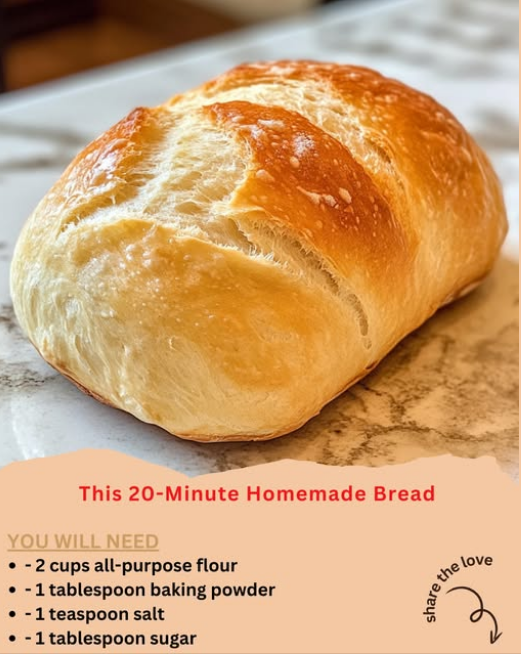
Phase 1: Dry Solid Homogenization
Whisking the dry ingredients is critical for Particle Distribution. If the baking powder is clumped, you will have “hot spots” of bitterness and localized over-expansion, leading to an uneven crumb structure.
Phase 3: The 60-Second Knead
Kneading for exactly one minute is a Mechanical Alignment process. You aren’t building the heavy gluten networks required for a sourdough; you are simply ensuring the proteins are hydrated and organized enough to hold the $CO_2$ during the rapid bake.
Phase 4: Thermal Expansion & Scoring
Slashing the top of the loaf is not just decorative; it is Pressure Regulation. In a 450°F oven, the internal gases expand violently. The slashes provide “weak points” for this expansion to occur, preventing the loaf from rupturing at the base.
4. Service and Storage: Post-Bake Management
Because this bread lacks the preservative qualities of long fermentation (which creates natural acids), its Shelf Life is shorter than traditional loaves. It is designed for immediate consumption.
| State | Texture Observation | Stability Limit |
|---|---|---|
| Hot (5 mins post-bake) | Crisp crust; soft, steaming interior. | Peak sensory quality. |
| Room Temp (sealed) | Firm, biscuit-like crumb. | 12–18 Hours. |
| Toasted | Restored crispness; nutty aromatics. | Up to 2 Days. |
5. Tips: Managing the Crumb Density
- Water Temperature: Aim for approximately 105°F (40°C). This temperature facilitates faster starch hydration without reaching the point where it would denature the proteins before they can expand.
- The Hollow Tap: Tapping the bottom of the loaf checks for Internal Cavitation. A hollow sound confirms that the $CO_2$ has successfully created a porous, airy structure inside.
Conclusion: The Speed of Science
20-Minute Homemade Bread is a triumph of Baking Efficiency. By replacing hours of fermentation with a rapid chemical reaction, you create a versatile, reliable loaf that fits into modern schedules. Master the “light touch” and the high-heat bake, and you’ll always have fresh bread on the table. Enjoy the warmth!
Frequently Asked Questions
Q: Can I use whole wheat flour?
A: Yes, but whole wheat is heavier and has bran “shards” that cut gluten. You may need an extra 1/4 teaspoon of baking powder and a bit more water to achieve the same rise.
Q: Why did my bread taste slightly metallic?
A: This usually happens if the baking powder isn’t fully mixed. Ensure you whisk the dry ingredients thoroughly to distribute the sodium bicarbonate evenly.
Would you like me to provide a recipe for a “Garlic-Herb Compound Butter” to serve with your warm loaf, or perhaps show you how to turn this dough into “Quick Pizza Crust”?
Related posts:
 The Ultimate Guide to No-Knead Garlic Bread
 Mastering the Warm Cinnamon Sugar Apple Loaf
 Mastering the Science of 20-Minute No-Yeast Bread
 The Global Climate Crisis: Causes, Catastrophic Effects, and Solutions
 Smoky Jalapeño Popper Meatloaf: The Ultimate Comfort Fusion
 Mastering Orange Glazed Cranberry Bread
