
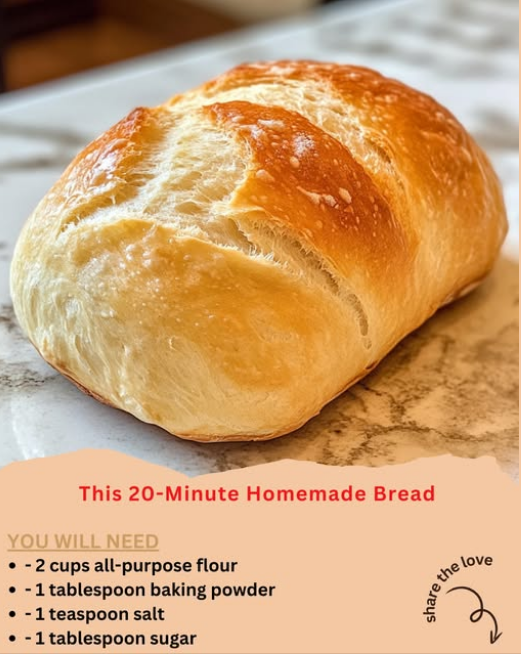
The Rapid Bread Matrix
1. Introduction: Yeast vs. Chemical Leavening
In traditional bread making, yeast consumes sugars to produce $CO_2$ over several hours. In this 20-minute protocol, we utilize Baking Powder—a combination of sodium bicarbonate (a base) and a dry acid (usually cream of tartar or sodium aluminum sulfate). When moisture is added, these components react to create immediate gas bubbles, which are then trapped by the flour’s Glutenin and Gliadin proteins.
2. Ingredients: The Structural Infrastructure
- 3 Cups All-Purpose Flour: Provides the Protein Chassis. AP flour is ideal here because it offers enough gluten for structure without being too “tough” for a quick-mix dough.
- 2 Teaspoons Baking Powder: The primary Gas Generator. This replaces the biological activity of yeast.
- 1 Cup Warm Water: Acts as the solvent to activate the leavening agents and hydrate the starch granules.
- 2 Tablespoons Olive Oil: A Lipid Tenderizer. It coats gluten strands to prevent them from becoming too long and rubbery, ensuring a “short” and soft crumb.
