
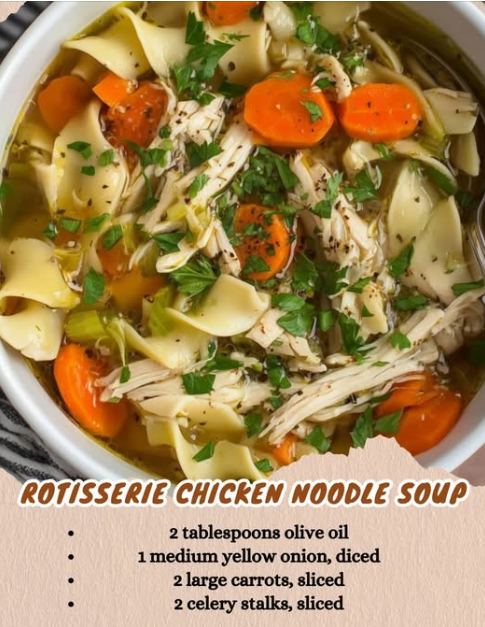
Molecular Gastronomy: The Rotisserie Chicken Noodle Protocol
Introduction: The Umami of Reconstituted Poultry
The Rotisserie Chicken Noodle Soup is an exercise in Thermal Efficiency. By utilizing a bird that has already undergone Dry-Heat Pyrolysis (roasting), we bypass the initial stages of flavor development. The objective is to transition these flavors into an Aqueous Solution while managing the Starch Gelatinization of the noodles to prevent the broth from becoming overly turbid.
Chemically, we are looking to extract collagen from any remaining connective tissue and glutamates from the roasted muscle fibers. The “mirepoix” base provides the essential sugars and sulfur compounds that round out the sensory experience.
Ingredients: The Molecular Building Blocks
1. The Aromatic Base (Mirepoix)
- 2 tbsp Olive Oil: The Lipid Solvent for fat-soluble vitamins and aromatics.
- 1 Medium Yellow Onion (Diced): Provides Allium Volatiles and sweetness.
- 2 Large Carrots (Sliced): Contributes Beta-Carotene and sugars.
- 2 Celery Stalks (Sliced): Provides Phthalides and structural crunch.
- 3 Garlic Cloves (Minced): Adds Allicin and pungent complexity.
2. The Protein & Fluid Phases
- 1 Rotisserie Chicken (Shredded): The Pre-Cooked Protein Aggregate.
- 8 cups Chicken Broth/Stock: The Continuous Liquid Phase.
- Dried Thyme/Bay Leaf: Sources of Terpenes and Volatile Oils.
3. The Polysaccharide Units
- 8 oz Egg Noodles: High-protein pasta units that provide Mechanical Substance.
