
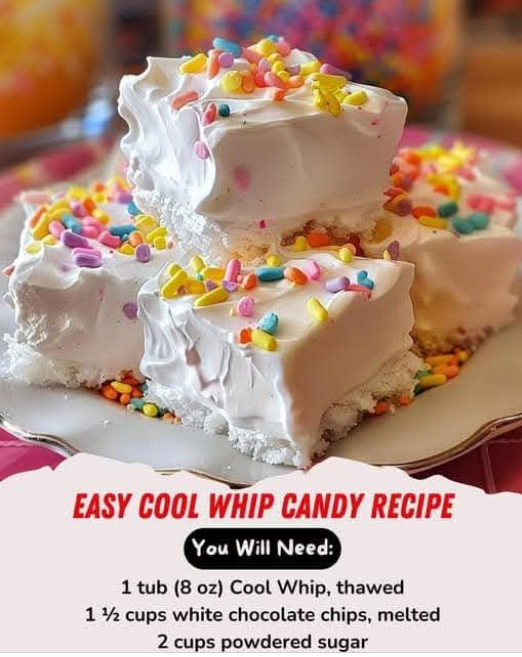
The Science of the Air-Light Sweet: A Cool Whip Candy Deep-Dive
Introduction: The Architecture of Stabilized Foams
In the culinary world, Cool Whip Candy is a study in Phase Management. On this Wednesday, December 24, 2025—Christmas Eve—this candy provides a festive, effortless alternative to traditional fudge. Unlike heavy chocolate ganache, this candy utilizes Hydrogenated Vegetable Oils and High-Fructose Corn Syrup to maintain a lightweight, airy density.
This guide explores the Viscosity of Melted Lipids, the Hygroscopic Properties of powdered sugar, and the Crystallization Kinetics of white chocolate. We will look at why the “folding” technique is chemically necessary to prevent the collapse of the Cool Whip’s internal air bubbles.
Ingredients: The Molecular Building Blocks
To engineer a candy that “melts in your mouth,” each ingredient must fulfill a specific functional role in the final suspension:
- 1 tub (8 oz) Cool Whip (Thawed): This is your Aqueous Foam Base. Cool Whip is a complex emulsion of water, vegetable oil, and gums. It provides the “Airiness” that differentiates this candy from traditional truffles.
- 1 ½ Cups White Chocolate Chips: These act as the Structural Binder. White chocolate contains cocoa butter and milk solids. When melted and then chilled, the cocoa butter undergoes Recrystallization, acting as the “skeleton” that holds the soft foam together.
- 2 Cups Powdered Sugar: This is the Structural Filler and Sweetener. Because it contains a small amount of cornstarch, it absorbs excess moisture from the Cool Whip, turning a liquid-ish foam into a pliable “dough.”
- 1 tsp Vanilla Extract: A Volatile Aromatic. The alcohol in the extract helps carry the scent of the vanilla throughout the fat-heavy candy base.
- Sprinkles: These provide Textural Contrast. Without them, the candy is “Mono-textural”; the sprinkles provide the necessary crunch to stimulate the palate.
