ADVERTISEMENT
The ingredient list is lean and efficient, focused on delivering maximum nutritional impact and flavor with minimal fuss. Each component plays a specific role, from providing structure to delivering seasoning.
The Core Structure (Protein & Base):
- 1 lb chicken breast cubes: The primary protein source. Cubing the chicken ensures quick, even cooking in the skillet. For nutritional density, chicken breast offers lean protein.
- 1 cup cottage cheese: The secret creamy binder. Cottage cheese is rich in casein protein, which contributes to its high protein count. When heated gently, it softens to create the luscious sauce base. Using full-fat or 2% cottage cheese is recommended for the best melting texture.
- 1/2 cup mozzarella: The finishing touch. Mozzarella is used for its superior stretching and melting qualities, providing the classic “cheesy pull” that completes the melt and seals in the heat.
The Flavor and Fiber Foundation:
- 1 cup mixed vegetables: The source of fiber, color, and vitamins. Frozen mixed vegetables (peas, carrots, corn, green beans) are quick and convenient, requiring no chopping. Fresh, quick-cooking vegetables like broccoli florets or sliced bell peppers also work well.
- 1 small onion diced: The aromatic base. Sautéing the onion in oil (Step 1) establishes a savory foundation known as the *mirepoix* (or *soffritto* base), enhancing all subsequent flavors.
- 1 tbsp olive oil: The cooking fat. Used to sauté the aromatics and chicken, olive oil adds a healthy monounsaturated fat component.
The Seasoning (Simple Enhancers):
- 1 tsp garlic powder: A quick, potent seasoning that delivers the essential garlic flavor without the risk of scorching that fresh garlic sometimes poses in a hot skillet.
- Salt and pepper: Essential for seasoning the protein and vegetables. Use these to taste, remembering that the cottage cheese and mozzarella already contribute some salinity.
A Note on Cottage Cheese: To achieve an even smoother sauce, some cooks prefer to quickly pulse the cottage cheese in a blender or food processor before adding it to the skillet. This breaks up the curds and delivers a texture closer to ricotta or heavy cream, although the melting process in the skillet is often sufficient for a creamy result.
Methods: The Skillet-Frying Sequence for Success
The method is sequential, designed to cook the ingredients in order of their cooking time, ensuring everything finishes simultaneously and the creamy cheese binder does not curdle.
Phase 1: Building the Base and Searing the Protein
- Sauté the Aromatics: Heat the **1 tbsp olive oil** in a large skillet (cast iron or non-stick is ideal). Add the **diced onion** and sauté over medium heat until it is soft and translucent (about 3-4 minutes).
- Season the Chicken: Add the **cubed chicken** to the skillet. Season immediately with **salt, pepper, and garlic powder**. Stir to coat the chicken and onions evenly.
- Cook the Chicken: Continue to cook the chicken over medium heat, stirring occasionally, until it is **lightly golden** on the outside and cooked through (about 5-7 minutes). Ensure the internal temperature reaches $165^\circ\text{F}$ ($74^\circ\text{C}$).
Phase 2: Combining the Fillings and Creaming the Sauce
- Add the Veggies: Add the **mixed vegetables** (if using frozen, let them thaw slightly or add a splash of water to steam) and stir well to combine with the chicken and seasonings. Cook for 2-3 minutes until the vegetables are heated through.
- Fold in the Cottage Cheese (Critical Step): **Lower the heat to low.** This step is crucial. Fold in the **1 cup cottage cheese**. Do not boil! Gently stir and let the cheese warm through. It will start to soften and melt, creating the creamy layer without separating or curdling, which can happen if the heat is too high.
Phase 3: The Final Melt and Serve
- The Mozzarella Melt: Add the **mozzarella** evenly on top of the chicken and vegetable mixture. Cover the skillet with a lid. Allow the dish to sit for 2-3 minutes until the mozzarella is fully melted and gooey.
- Serve: Serve the **warm and creamy** skillet melt immediately.
Nutritional Breakdown and Serving Suggestions
This dish is a fantastic example of a macro-friendly meal, prioritizing protein density and moderate fat, making it extremely satiating.
Key Nutritional Takeaways (Approximate per Serving):
- Protein Power (38 g): The combination of chicken breast and cottage cheese (a casein protein source) delivers a massive protein punch, supporting muscle maintenance and providing prolonged satiety.
- Balanced Fat (16 g): The fat content is moderate, primarily coming from the olive oil and the dairy fats in the cheeses, ensuring the meal remains flavorful without being overly heavy.
- Fiber and Carbs (15 g): The carbs mostly come from the mixed vegetables, offering necessary fiber and micronutrients. This makes the dish relatively low in net carbs and suitable for many dietary goals.
Serving Suggestions:
- Standalone Meal: Due to its nutrient density, the skillet melt can easily be served on its own as a complete meal.
- Starch Pairings: For a more substantial meal, serve over a small portion of **quinoa, brown rice, or cauliflower rice** to soak up the creamy sauce.
- Green Side: Pair with a simple **side salad** dressed with vinaigrette to add fresh, contrasting acidity and extra greens.
Tips: Mastering the Creamy Melt and Customization
Expert Tips for Skillet Success:
- Heat Control is King: The most crucial step is reducing the heat (Step 5) before adding the cottage cheese. **High heat will cause the dairy protein to denature quickly and result in a grainy, separated sauce.** Keep it low and slow during the creaming process.
- Preventing Sticking: If the sauce starts to stick to the bottom during the melt phase, add 1–2 tablespoons of water, chicken broth, or milk to the skillet to loosen the base.
- Flavor Boost: For a richer taste, use a combination of garlic powder and onion powder (about 1/2 tsp each) on the chicken.
- Make it Smooth: If you absolutely require a restaurant-smooth sauce, blend the cottage cheese and a splash of milk until silky before adding it to the skillet.
Variations: Transforming the Skillet
This simple skillet base is an excellent canvas for different flavors and international twists.
The Tex-Mex Melt:
Replace the mixed vegetables with **canned black beans (rinsed), corn, and diced green chilies**. Season the chicken with **chili powder, cumin, and smoked paprika** instead of garlic powder. Garnish with cilantro and a dollop of Greek yogurt or sour cream.
The Italian Herb Skillet:
Replace the mixed vegetables with **sun-dried tomatoes and spinach**. Season the chicken with **Italian seasoning and dried oregano**. Replace the mozzarella with a mix of mozzarella and a sprinkle of grated **Parmesan cheese** for a sharp, savory finish.
The Tuna Melt Skillet:
Substitute the chicken breast with **canned tuna packed in water (drained)**. Tuna requires no cooking time. Follow the steps exactly, adding the tuna with the vegetables (Step 4), but ensure the heat remains very low to avoid overcooking the fish.
The Buffalo Chicken Melt:
During the creaming phase (Step 5), stir in **1/4 cup of your favorite hot sauce or buffalo sauce** along with the cottage cheese. The acidity of the sauce complements the dairy beautifully, creating a tangy, spicy skillet melt.
Conclusion: Effortless, Creamy Satisfaction
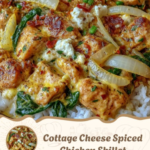
The Cottage Cheese Chicken Veggie Skillet Melt is a standout recipe for its convenience, nutritional profile, and surprising creamy texture. By understanding the critical role of low heat in preventing the cottage cheese from curdling, and by layering the ingredients in the correct sequence, anyone can achieve a deeply satisfying, high-protein meal in minutes.
This simple skillet method proves that healthy, hearty eating does not require hours in the kitchen or complicated ingredients. Embrace the efficiency of the single pan, utilize the versatility of the base, and enjoy the creamy, cheesy result that is simple, colorful, and completely delicious.
Frequently Asked Questions: Troubleshooting and Clarifications
Q: Why did my cottage cheese curdle and separate?
A: Curdling is caused by **excessive heat**. Dairy proteins denature rapidly when boiled. Ensure the heat is turned to **low** (Step 5) before the cottage cheese is added, and never allow the mixture to come to a hard boil after the cottage cheese is incorporated.
Q: Can I use fresh vegetables instead of frozen mixed vegetables?
A: Yes. Use quick-cooking fresh vegetables like sliced zucchini, mushrooms, or chopped bell peppers. Add them to the skillet after the chicken is fully cooked, but cook them for a few extra minutes (5-7 minutes) until they are tender-crisp before adding the cottage cheese.
Q: Can I substitute the chicken with another meat?
A: Absolutely. **Ground turkey** or **ground beef** can be used in the same quantity. Cook and drain the ground meat after the onion is sautéed, then proceed with Step 4. You can also use precooked shredded chicken for an even faster prep time.
Q: Does the calorie count change if I use low-fat cottage cheese?
A: Yes. Using fat-free or low-fat cottage cheese and skim mozzarella will slightly reduce the fat content (and therefore the calories per serving). However, the resulting sauce may be thinner and less rich due to the lower percentage of milk fat.
ADVERTISEMENT