
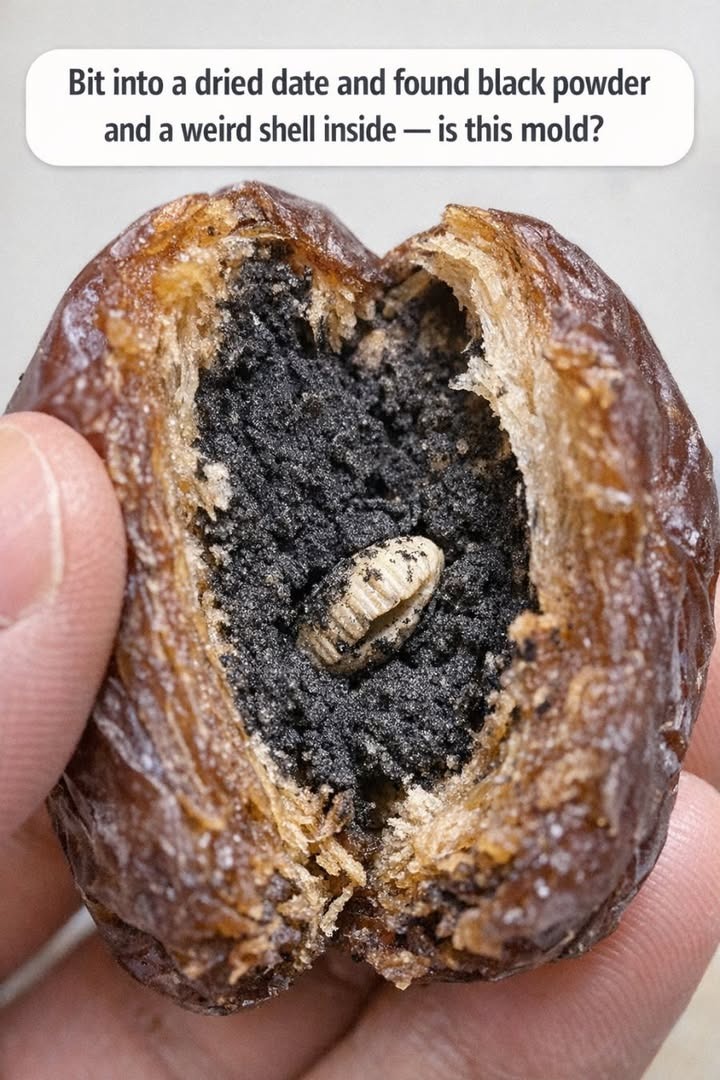
Dried dates are a beloved snack, known for their rich sweetness and chewy texture. However, encountering unexpected substances like black powder or unusual shells can be alarming for consumers. Understanding these potential contaminants is essential for ensuring food safety and enjoying your treats with peace of mind. This article explores common issues found in dried dates, how to identify them, and what actions to take if you discover something unusual.
What That Black Powder in Your Date Most Likely Is
The black powder found inside a dried date is most commonly identified as insect frass, which is the excrement left behind by insects that may have infested the fruit. It could also be mold spores, but this is less common if the dates have been stored properly. In some cases, the powder might be harmless sugar crystals that have formed due to the dehydration process.
Insect frass is typically very fine and may be accompanied by small holes in the date’s flesh, indicating the presence of larvae. Mold, on the other hand, often presents as a more fibrous or web-like growth. Sugar crystals, conversely, will have a granular texture and often appear near the surface of the fruit.
Meet the Culprit: Dried Fruit Beetles and Other Common Pests
Dried fruit beetles, also known as sap beetles, are a common pest found in stored dried fruits. These beetles thrive in warm, humid environments and can infest dates during storage or transportation. Adult beetles are small, measuring around 2-3 mm in length, and are usually brown or black. Other pests that may infest dried fruits include Indian meal moths and their larvae, which can leave behind webbing and frass, easily mistaken for mold. Proper inspection of the packaging and the dates themselves can help identify these pests before consumption.
How to Tell Mold From Insect Frass, Dirt, and Sugar Crystals
Identifying the difference between mold, insect frass, dirt, and sugar crystals can be challenging but is essential for ensuring the safety of the dried dates. Mold typically presents as fluffy, fibrous growths that may be white, green, or black in color and often has a distinct musty odor. Insect frass is usually finer than dirt and may accompany small holes or tunnels in the fruit. Sugar crystals, however, have a crystalline structure and are often found on the surface of the date rather than embedded within it. Dirt is generally coarser and may be present if the dates were not properly cleaned before drying.
