
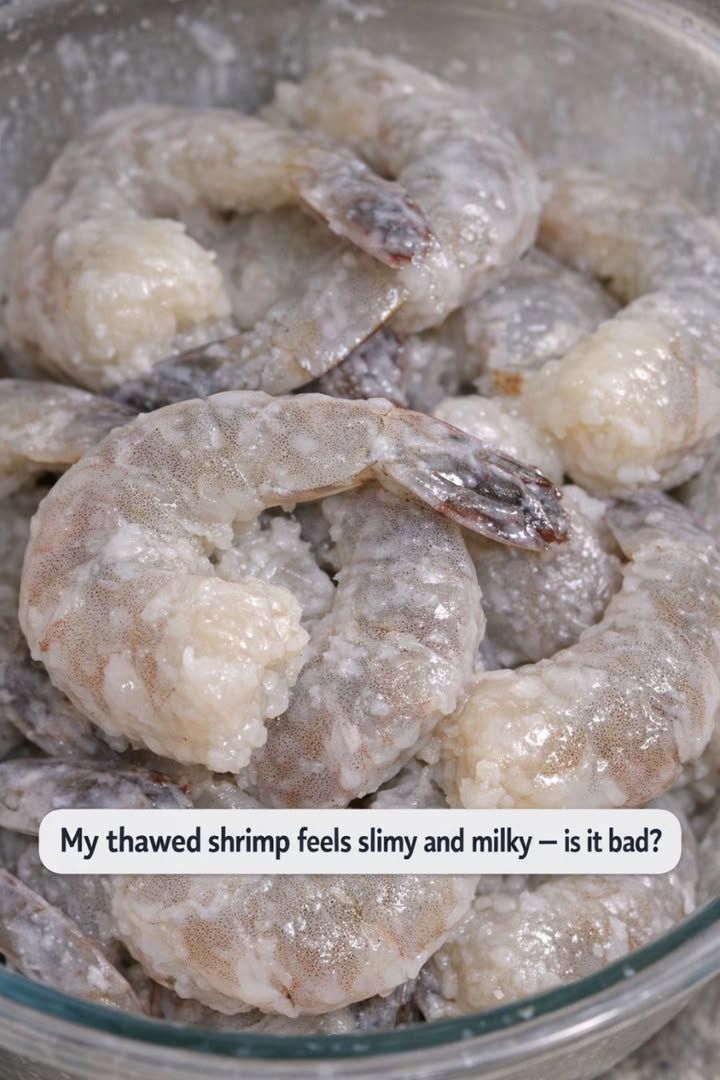
The Science Behind Shrimp Texture
The slimy texture on shrimp is often due to protein denaturation and moisture loss, known as drip loss. As shrimp thaws, the protective ice glaze melts, releasing moisture. This moisture can feel slippery but is generally harmless if the shrimp is fresh. However, exposure to temperature fluctuations can lead to protein breakdown, resulting in a slimy feel. Bacterial growth thrives in warm conditions, emphasizing the importance of proper thawing techniques.
Proper Storage and Shelf Life of Thawed Shrimp
Once shrimp is thawed, it should be kept refrigerated and consumed within 1-2 days. The short shelf life is due to shrimp’s high protein content, which is susceptible to bacterial growth. To maximize freshness, store thawed shrimp in the coldest part of your refrigerator in a tightly sealed container to prevent exposure to air and contaminants. Always check for signs of spoilage before cooking.
Freshness Checklist: Smell, Color, and Touch
To ensure shrimp freshness, start with a smell test. Fresh shrimp should have a mild ocean scent, not a strong or pungent odor. Next, check the color; the shrimp should appear slightly translucent with a light pink or gray hue. Finally, perform a touch test—fresh shrimp should feel firm, not mushy or slimy. By following these steps, you can confidently determine whether your shrimp is safe to eat.
Thawing Techniques: Avoiding Common Mistakes
One of the most common mistakes is thawing shrimp at room temperature, which can lead to rapid bacterial growth and spoilage. Instead, thaw shrimp slowly in the refrigerator or under cold running water. Another mistake is refreezing thawed shrimp, which can damage its texture and introduce bacteria. Always plan to use thawed shrimp promptly to maintain quality and safety.
