
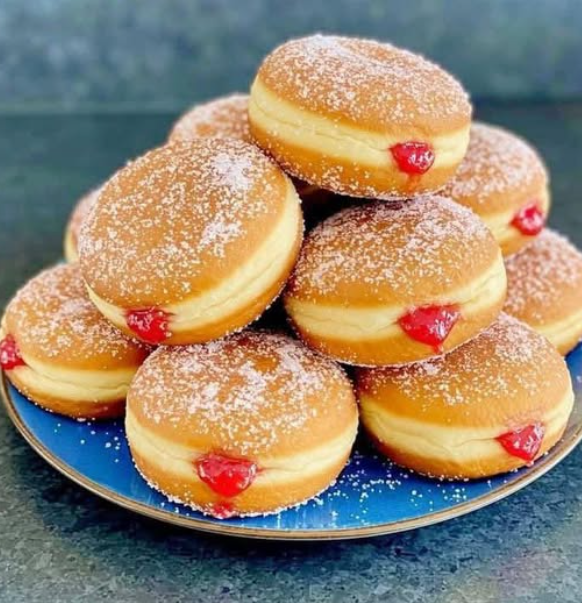
The Golden Cloud: A Deep Dive into Artisanal Jam-Filled Doughnuts
Introduction: The Soul of the Fried Confection
There is a universal joy found in the first bite of a warm, sugar-dusted doughnut. It begins with the tactile crunch of granulated sugar, followed by the pillowy resistance of yeasted dough, and culminates in a vibrant “explosion” of fruit preserves. Often referred to as Berliner, Krapfen, or simply “jelly donuts,” these treats represent the pinnacle of comfort food.
Unlike cake doughnuts which rely on chemical leaveners, the jam-filled variety is a product of biological fermentation. The yeast works tirelessly to create an internal network of air pockets, resulting in a texture that is light, airy, and capable of holding a generous amount of filling. Mastering this recipe is a lesson in patience and temperature control, ensuring that the exterior is golden and crisp while the interior remains fully cooked and cloud-like.
Ingredients: The Anatomy of the Dough
Precision in measurement is vital for yeast-based doughs. Below are the components required to create approximately 12 to 15 medium-sized doughnuts.
- 300 g Wheat Flour: All-purpose flour works well, though “00” or bread flour provides a slightly chewier structure.
- 80 g White Sugar: Provides sweetness and feeds the yeast to aid in fermentation.
- ½ tsp Salt: Essential for regulating yeast activity and brightening the flavor of the dough.
- 15 g Active Dry Yeast: The engine of the recipe; ensure it is fresh and not expired.
- 2 Eggs: Adds richness, color, and provides the protein structure needed for a high rise.
- 2 tbsp Melted Butter: Introduces lipids that keep the crumb tender and moist.
- 250 ml Warm Water: Ideally between 38°C and 43°C (100°F–110°F) to activate the yeast without killing it.
- Strawberry Jam: A high-quality, seedless or finely strained jam is best for filling.
- Extra White Sugar: For coating the hot doughnuts immediately after frying.
- Oil for Frying: A neutral oil with a high smoke point, such as canola, vegetable, or peanut oil.
