Step 1: Prep and Pasta
Begin by bringing a large pot of heavily salted water to a boil. Like the ocean, your pasta water should be seasoned. Cook your fettuccine according to the package instructions until al dente. Important: Reserve at least one cup of the starchy pasta water before draining. Set the pasta aside.
Step 2: Searing the Steak
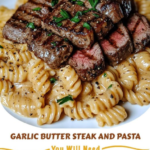
Pat your steak cubes completely dry with paper towels. Season them generously with salt, pepper, and a pinch of smoked paprika. Heat 1 tablespoon of oil in a large skillet over high heat. When the oil is shimmering, add the steak in a single layer. Sear for 2 minutes per side to achieve a deep brown crust while keeping the center medium-rare. Remove the steak from the pan and let it rest on a plate.
Step 3: Sautéing the Shrimp
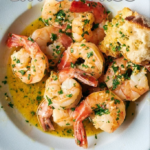
In the same skillet (don’t wash it!), add another tablespoon of oil. Toss the shrimp with a bit of garlic powder and salt. Sauté for about 90 seconds per side until they turn pink and opaque. Do not overcook them, as they will toughen. Remove and set aside with the steak.
Step 4: Building the Aromatics
Lower the heat to medium. Add the butter to the skillet. Once melted, scrape up the brown bits (the fond) left behind by the steak. Add the shallots and cook for 2 minutes until translucent, then add the minced garlic for 30 seconds until fragrant.
Step 5: Creating the Sauce
Pour in the heavy cream. Bring to a gentle simmer, whisking constantly. Let it reduce slightly for 3-4 minutes. Stir in the Parmesan cheese until the sauce is smooth. Season with oregano and a touch more smoked paprika.
Step 6: The Great Reunion
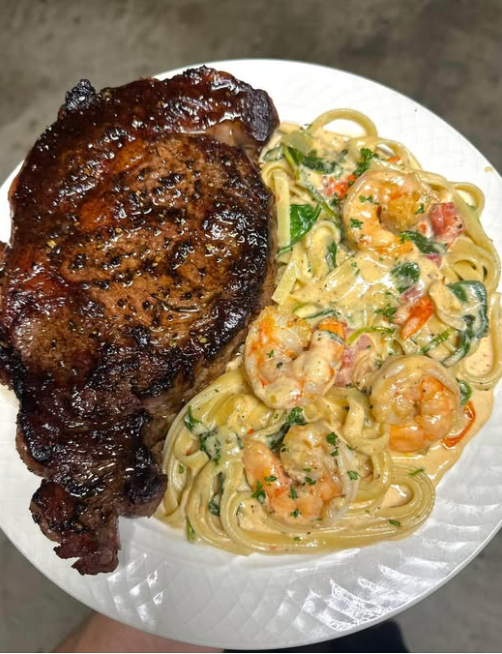
Add the cooked pasta directly into the sauce. If the sauce is too thick, splash in some of that reserved pasta water. Toss in the steak, shrimp, and any accumulated juices from the plate. Gently fold everything together until the pasta is coated in a glossy, velvet-like sheen.
Serving and Storage
Serving: Transfer the pasta to wide, warmed bowls. Garnish heavily with fresh parsley and a final dusting of Parmesan. A squeeze of fresh lemon over the top provides a bright acidity that balances the heavy cream.
Storage: This dish is best enjoyed immediately. However, leftovers can be stored in an airtight container for up to 2 days. Reheating Tip: Cream-based sauces often “break” (separate) when reheated. To prevent this, add a splash of milk or water to the pasta before microwaving or reheating on the stovetop over low heat.
Tips: Mastery in the Details
- Room Temperature Meat: Take your steak out of the fridge 20 minutes before cooking. This ensures an even sear and prevents the center from staying cold.
- Don’t Crowd the Pan: If your skillet isn’t large enough, sear the steak in batches. If the pan is too crowded, the meat will steam instead of crusting.
- The “Al Dente” Rule: Cook your pasta one minute less than the box suggests. It will finish cooking in the hot cream sauce, absorbing flavor without becoming mushy.
Variations: Making It Your Own
While the classic version is hard to beat, you can adapt this recipe to suit your pantry or dietary needs:
- Cajun Twist: Swap the oregano and paprika for a heavy dusting of Cajun seasoning for a “Pastalaya” vibe.
- The Green Version: Add two cups of fresh baby spinach or roasted broccoli florets during the final mixing stage for added nutrients and color.
- Low Carb: Replace the fettuccine with zucchini noodles (zoodles) or spaghetti squash. Reduce the simmering time of the sauce so the vegetables don’t become watery.
- White Wine Infusion: Deglaze the pan with 1/4 cup of dry white wine (like Pinot Grigio) after sautéing the garlic but before adding the cream.
Tips: Pro-Level Finishing
- Use Fresh Cheese: Avoid the “green shaker” parmesan. Pre-shredded cheese is coated in cellulose (an anti-clumping agent) which can make your sauce gritty. Grate it yourself for a silky finish.
- The Butter Finish: For an extra restaurant-style gloss, stir in a cold tablespoon of butter right before serving.
- Texture Contrast: To add a bit of crunch, toast some panko breadcrumbs with garlic and butter in a separate pan and sprinkle them over the finished dish.
Conclusion: A Culinary Triumph
Steak and shrimp pasta is more than just a meal; it is an experience of textures and tastes. By mastering the art of the sear and the patience of a slow-reduced cream sauce, you transform simple ingredients into a five-star dining experience. Whether you are cooking for a special someone or simply treating yourself after a long week, this dish offers the comfort of pasta with the undeniable “wow factor” of premium proteins. Don’t be afraid to experiment with the spices or the types of steak used—the beauty of this recipe lies in its versatility. Now, grab your skillet and let the aroma of garlic and seared beef fill your kitchen.
Frequently Asked Questions
- Can I use frozen shrimp?
- Absolutely. Just ensure they are completely thawed and patted dry before they hit the pan. Excess moisture will prevent them from getting that golden-brown color.
- What steak is best if I’m on a budget?
- While Ribeye is king, Sirloin Tip or Flank Steak are excellent budget-friendly alternatives. Just be sure to slice them against the grain to ensure tenderness.
- Is there a substitute for heavy cream?
- You can use half-and-half, but the sauce will be thinner. To thicken it, you may need to add a teaspoon of cornstarch mixed with water (a slurry) during the simmering phase.
- How do I know when the steak is medium-rare?
- For 1-inch cubes, a high-heat sear of 2 minutes per side is usually perfect. If using a meat thermometer, look for an internal temperature of $130^{\circ}F$ to $135^{\circ}F$ before resting.
Would you like me to create a customized grocery list or suggest a wine pairing for this specific recipe?