
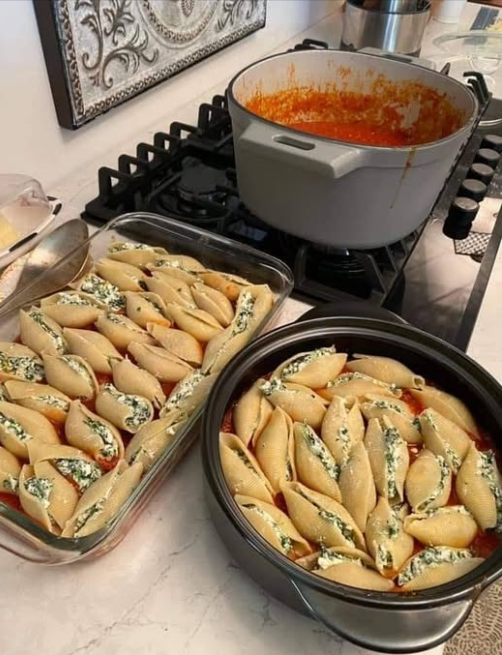
Italian Stuffed Shells: Engineering the Perfect Cheese Emulsion
Introduction: The Vertical Lasagna Concept
In the culinary world, Stuffed Shells are often described as “Deconstructed Lasagna.” However, they offer a unique Structural Advantage. On this Wednesday, December 24, 2025—Christmas Eve—these shells provide a self-contained, portion-controlled alternative to a messy casserole. The physics of the dish relies on the Tensile Strength of the pasta and the Coagulation of the cheese filling.
This guide will explore the Starch Retrogradation of pasta, the Casein Stability of ricotta, and the Maillard Reaction that occurs on the mozzarella crust. We will delve into why the “Al Dente” boil is a non-negotiable requirement for baked pasta.
Ingredients: The Molecular Architects
- 20 Jumbo Pasta Shells: These are made from Durum Wheat Semolina, which has a high gluten content. This provides the “backbone” needed to hold the heavy cheese filling without tearing.
- 1 lb Ricotta Cheese: Ricotta is a “whey cheese” with a high moisture content. It provides the creamy, airy volume of the filling but requires a binder to keep it from becoming watery in the oven.
- 2 Cups Shredded Mozzarella: This is a High-Stretch Lipid. Mozzarella contains long protein strands that align when heated, providing the iconic “cheese pull.”
- 1 Cup Grated Parmesan: Parmesan is an Umami Booster. It is rich in glutamates and has a low moisture content, which helps absorb any excess liquid from the ricotta.
- 1 Large Egg: The egg is the Thermal Binder. As the internal temperature of the shell reaches 145°F, the egg proteins uncoil and link together, “locking” the cheeses into a stable matrix.
