Phase 1: The “Under-Boil” Strategy
Boil the shells for 2 minutes less than the package instructions. The “Carry-Over” Science: The pasta will continue to hydrate using the moisture from the marinara sauce while in the oven. If you cook them fully in the water, they will turn into mush during the 30-minute bake.
Phase 2: The Cold-Rinse Seal
Immediately shock the shells in cold water. This stops the cooking process and, more importantly, washes away excess surface starch. This prevents the shells from sticking to each other, allowing for easy handling during the stuffing phase.
Phase 3: The Cheese Emulsion (The Filling)
Whisk the ricotta, half the mozzarella, the parmesan, and the egg until smooth. The “Air Incorporation” Secret: Briskly whisking the ricotta introduces tiny air bubbles, which expand slightly in the oven, making the filling light and “pillowy” rather than dense and heavy.
Phase 4: The Strategic Layering
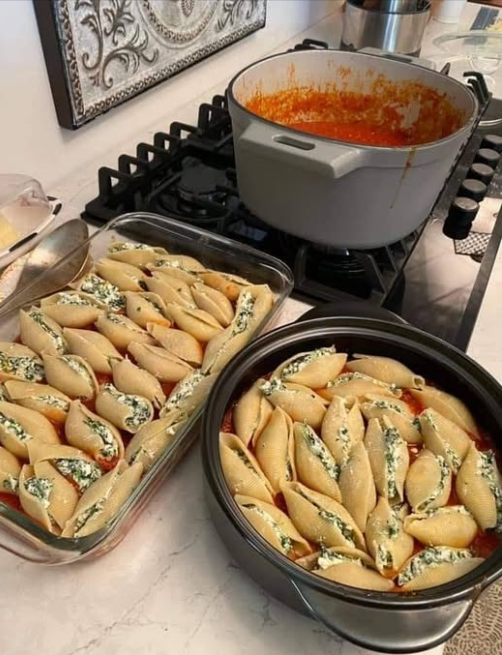
Spread a thin layer of sauce on the bottom of the pan before adding the shells. The “Thermal Buffer”: This layer of sauce prevents the bottom of the pasta from fusing to the baking dish and provides a constant source of steam to keep the shells tender.
Phase 5: The “Tension” Bake
Cover with foil for the first 20 minutes, then uncover for the final 10. The “Evaporative Cooling” Effect: Covering the pan traps steam, which cooks the egg binder evenly. Uncovering it allows the moisture to escape from the top, allowing the mozzarella to reach the 300°F required for the Maillard reaction (browning) to occur.
The Science: Why the Egg is Mandatory
Without an egg, ricotta cheese will “break” at high temperatures. As the water in the cheese turns to steam, it separates from the fats and proteins, leaving a grainy curd and a pool of liquid at the bottom of the shell. The Egg Proteins act as a net, trapping that moisture and fat in place. This is the difference between a “watery” shell and a “gourmet” shell.
Chef’s Tips for a Professional Finish
- The “Spinach” Upgrade: If adding spinach, squeeze it in a kitchen towel until it is bone-dry. Any extra water from the vegetables will ruin the egg’s ability to bind the cheese.
- The Piping Bag Hack: Instead of using a spoon, put the cheese mixture into a large Ziploc bag and snip the corner. You can “pipe” the filling into the shells in half the time with zero mess.
- Nutmeg Secret: Add a tiny pinch of freshly grated nutmeg. Nutmeg contains myristicin, which chemically enhances the “nutty” notes of the Parmesan and Ricotta.
Holiday Variations
| Variation | The Twist | The Vibe |
|---|---|---|
| Meat-Lover’s Shells | Add browned Italian sausage to the sauce. | Hearty, savory, and bold. |
| Pesto Cream Shells | Swap marinara for a pesto-alfredo blend. | Sophisticated, green, and rich. |
| Pumpkin Ricotta | Add 1/2 cup pumpkin puree and sage to the filling. | The ultimate “Winter Solstice” flavor. |
Conclusion: A Christmas Eve Tradition
Italian Stuffed Shells are a triumph of pasta engineering. By balancing the hydration of the durum wheat with the protein binding of the egg-ricotta mixture, you create a dish that is both structurally sound and decadently creamy. On this Christmas Eve 2025, as the smell of toasted garlic and bubbling mozzarella fills your kitchen, you’re serving a masterclass in Italian-American comfort. Enjoy the cheesy bliss!
Frequently Asked Questions
- Can I make these ahead of time?
- Yes! You can assemble the shells up to 24 hours in advance and keep them in the fridge. Because the pasta is “under-boiled,” it won’t get soggy while sitting in the sauce overnight. Just add 10 minutes to the bake time if cooking directly from the fridge.
- Can I freeze stuffed shells?
- Stuffed shells are one of the best freezer meals. Freeze them in a single layer on a sheet pan before transferring to a bag. Bake them from frozen at 375°F for 45-55 minutes.
- The cheese is sticking to my foil! How do I stop it?
- Always spray the “inside” of your aluminum foil with non-stick cooking spray before covering the dish. Or, use the “tenting” method to ensure the foil doesn’t physically touch the cheese layer.
Would you like me to suggest a “Garlic Knots” recipe to serve on the side, or perhaps show you how to make a “Homemade Marinara” to take these shells to the next level?