
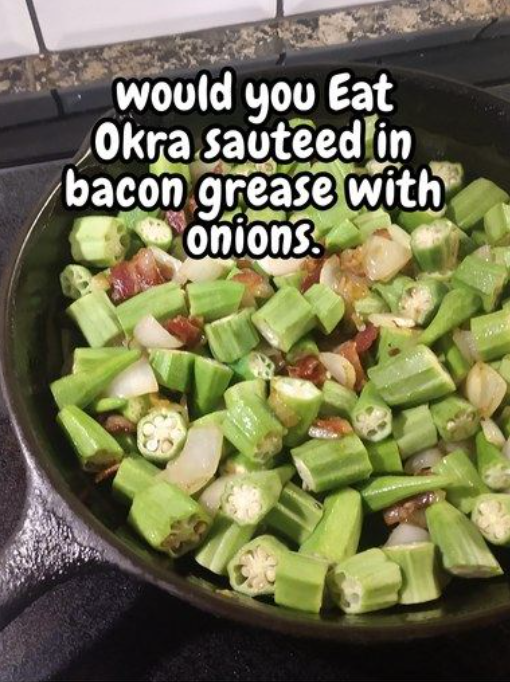
Hearty Southern Comfort: Mastering Sautéed Okra with Beef
Introduction: Elevating the Southern Side
This **Sautéed Okra with Beef** recipe transforms the simple vegetable side into a protein-rich, satisfying meal. It employs the crucial technique of dry-searing the okra to eliminate sliminess, while simultaneously building a savory flavor profile using the rendered **beef fat** and the deep browning of the meat.
The main challenge in cooking okra is managing its **mucilage**, a natural thickener that becomes sticky in the presence of heat and low-fat moisture. This recipe cleverly utilizes the lean beef to achieve high-heat browning, which is the key to preventing the slime.
Success requires adherence to three core regulations: **The Two-Stage Browning Principle, The High-Heat Moisture Evaporation Rule, and The Beef Reintroduction Protocol.**
The first regulation, **The Two-Stage Browning Principle** (Instruction 3 & 6), dictates how flavor is layered. **Stage 1** involves browning the **small diced beef** to create a rich, savory crust (Maillard reaction) and render flavorful fat. **Stage 2** involves browning the okra itself, which concentrates its flavor and prevents sliminess. The removal and re-addition of the beef prevent it from overcooking during the okra’s long sauté time.
The second regulation, **The High-Heat Moisture Evaporation Rule** (Instruction 7), is the anti-slime technique. The sliced okra must be cooked over medium to medium-high heat, using the rendered **beef fat**. This high heat rapidly evaporates the moisture released by the fresh okra slices, giving the mucilage no chance to hydrate and form a slimy film. The goal is a **tender and slightly browned** texture, which usually takes longer than typical vegetable sautéing.
The third regulation, **The Beef Reintroduction Protocol** (Instruction 10), ensures perfect texture for the protein. Once the okra has achieved the right texture and is seasoned, the **cooked beef** is briefly returned to the skillet. This step only takes a minute or two, just enough time to reheat the beef and coat it in the flavorful, seasoned juices from the finished okra, without cooking it further or drying it out.
Ingredients: Defining Protein, Texture, and Searing Fat
The essential components for this robust side:
I. The Core Vegetables:
- **Fresh okra**, sliced into bite-sized pieces (The texture challenge)
- **1 medium** onion, chopped into thin slices (The aromatic base)
II. Protein and Fat Base:
- **Small diced beef** (such as beef brisket or beef strips) (The savory protein)
- **Beef fat** left in the pan (The essential searing fat)
- **A touch of oil** (if needed to reach 1–2 tablespoons of fat)
III. Seasoning and Heat:
- **Salt** and **black pepper** (Necessary seasoning)
- **A pinch** of cayenne pepper (For Southern warmth)
