
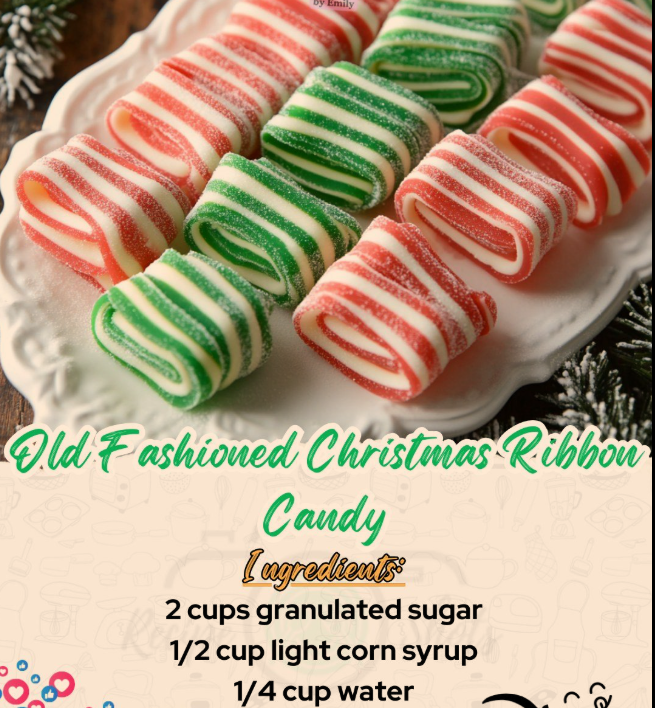
The Art of the Fold: Old Fashioned Christmas Ribbon Candy
Introduction: A Victorian Holiday Masterpiece
In the world of holiday sweets, few treats carry the nostalgic weight of Old Fashioned Christmas Ribbon Candy. Long before mass-produced gummy candies and chocolate bars dominated the market, these delicate, hand-pulled ribbons were the centerpiece of the Christmas season. Originating in Europe and becoming a beloved American tradition in the 19th century, ribbon candy is celebrated for its vibrant stripes, crystalline texture, and elegant “S” curves.
Making ribbon candy at home is a true culinary craft. It requires “Hard Crack” sugar work, where the syrup is heated until it reaches a state that, once cooled, shatters like glass. The process of pulling and folding the sugar aerates it, giving the candy its signature satiny luster. While it may seem intimidating, mastering the ribbon fold is a rewarding skill that turns your kitchen into a festive workshop. Whether you display it in an apothecary jar or give it as a handmade gift, this candy is the ultimate symbol of holiday spirit.
Ingredients: The Science of Clear Candy
Sugar work is chemistry. Each ingredient here plays a vital role in preventing crystallization and ensuring the candy is brittle and shiny.
- 2 cups Granulated Sugar: The structural base of the candy.
- 1/2 cup Light Corn Syrup: Acts as an “interfering agent” to prevent the sugar from turning grainy or recrystallizing.
- 1/4 cup Water: The medium used to dissolve the sugar crystals.
- 1/4 tsp Cream of Tartar: Adds stability to the sugar syrup and contributes to the candy’s clarity.
- 1/2 tsp Peppermint Extract: The classic holiday flavor, though cinnamon or wintergreen are excellent alternatives.
- Food Coloring: High-quality gel colors (red and green) work best to achieve vibrant, festive stripes.
- Powdered Sugar: For dusting your hands and the work surface to prevent sticking.
