Step 1: The Hard Crack Boil
In a heavy-bottomed saucepan, combine the sugar, corn syrup, water, and cream of tartar. Stir over medium heat until the sugar dissolves. Once it begins to boil, stop stirring. Attach a candy thermometer and boil the mixture until it reaches 300°F (149°C)—the “Hard Crack” stage. Remove immediately from heat.
Step 2: Flavoring and Coloring
Once the bubbling subsides, stir in the peppermint extract. Carefully pour the hot syrup onto a greased heat-resistant silicone mat or a marble slab. If you want multicolored ribbons, divide the syrup and tint one portion with food coloring, keeping the other clear or tinting it a contrasting color.
Step 3: The Pull and Stretch
As the sugar cools, it will begin to thicken. Using a bench scraper or gloved hands, fold the edges of the sugar into the center. Once it is cool enough to handle (but still very hot), begin pulling the sugar. Stretch it out and fold it back over itself repeatedly. You will see the candy turn from translucent to a brilliant, satiny opaque. This aeration is what creates the shine.
Step 4: Forming the Ribbons
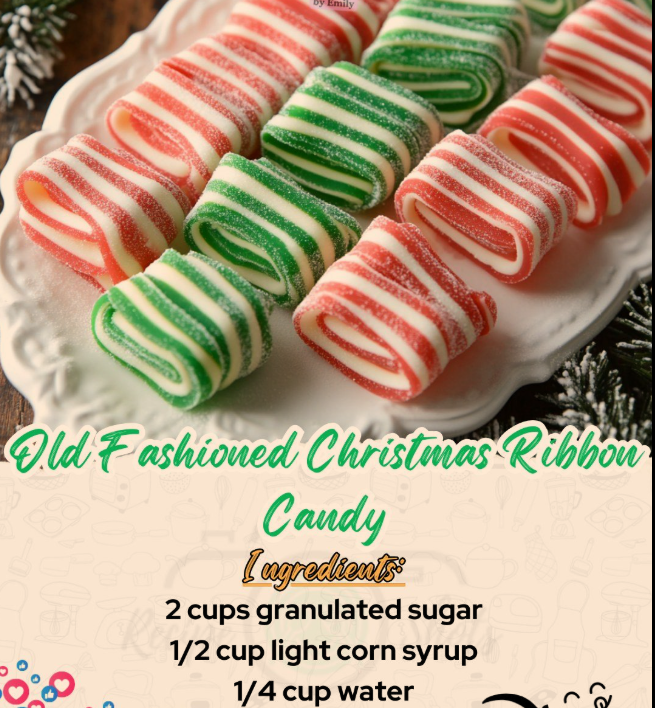
If using multiple colors, press the colored logs together to create stripes. Roll the sugar into a long, thin rope (about 1 inch wide). Working quickly, fold the rope back and forth in a “zig-zag” or “S” pattern on a surface dusted with powdered sugar. Use your fingers to support the loops until they harden.
Step 5: The Final Set
Let the ribbons sit undisturbed until they are completely cool and brittle. Once set, they will “snap” easily if you need to break them into smaller gifting sizes.
Serving and Storage
Serving: Ribbon candy is best displayed in clear glass jars where its colors can catch the holiday lights. It is meant to be eaten by breaking off small, crisp shards.
Storage: Humidity is the enemy of hard candy. Store your ribbon candy in an airtight container, layered with parchment paper, in a cool, dry place. If exposed to moisture, the candy will become sticky and lose its crystalline texture. Do not refrigerate.
Tips: Safety and Precision
- Safety First: Boiling sugar is extremely hot. Always wear “candy maker” gloves (heat-resistant cotton gloves covered by vinyl or latex) to protect your hands during the pulling and folding process.
- Calibrate Your Thermometer: Before starting, test your thermometer in boiling water ($100$°C) to ensure accuracy. Even a 5-degree difference can affect whether the candy sets properly.
- Work in Batches: If this is your first time, try making a half-batch. Sugar cools quickly, and it can be difficult for a beginner to fold an entire 2-cup batch before it hardens.
Variations: A Spectrum of Holiday Style
- Cinnamon Red Hots: Use red food coloring and cinnamon oil for a spicy, warming version of the ribbon.
- Spearmint Swirl: Use green gel coloring and spearmint extract for a refreshing, “cool” candy profile.
- Gold and Silver: Use edible luster dust mixed into the clear syrup for a sophisticated, metallic holiday look.
- Fruity Ribbons: Swap the peppermint for orange or raspberry extract for a non-traditional but delicious treat.
Tips: Perfecting the Fold
- The “Warm Oven” Trick: If your sugar rope hardens before you finish folding, place it on a silicone mat in a 200°F (93°C) oven for a minute or two to soften it back up.
- Striping Technique: For professional stripes, pull your white and colored sugar separately, then lay them side-by-side before doing one final pull to fuse them into a striped log.
- Avoid Bubbles: When stirring in your extract, do so gently. Rapid stirring can incorporate air bubbles that will mar the smooth, glass-like finish of the ribbons.
Conclusion: A Labor of Holiday Love
Old Fashioned Christmas Ribbon Candy is more than just a sweet; it is a labor of love that honors the craftsmanship of generations past. While the process requires patience and a bit of bravery with heat, the sight of those shimmering, colorful folds makes every moment at the stove worth it. This candy captures the magic of the holidays—bright, fragile, and beautiful. By making your own, you aren’t just creating a treat; you are keeping a timeless tradition alive for your family to enjoy. Happy folding!
Frequently Asked Questions
- Why did my candy turn out grainy?
- Grainy candy is caused by crystallization. This usually happens if there were undissolved sugar crystals on the side of the pot that fell into the syrup, or if the syrup was stirred after it started boiling.
- Can I make this without corn syrup?
- Corn syrup is an “invert sugar” that prevents crystallization. While you can use honey or a higher amount of cream of tartar, corn syrup provides the most reliable results for hard-crack candy.
- How do I clean the hardened sugar off my pot?
- Don’t scrub! Fill the pot with water and bring it to a boil. The boiling water will dissolve the hardened sugar in minutes, making cleanup effortless.
Would you like me to suggest a recipe for “Homemade Peppermint Bark” to use up your leftover candy shards, or perhaps a guide on different candy-making stages?