Phase 1: Mechanical Aeration
Cream the butter and sugar until the mixture is visibly lighter in color and double in volume. This mechanical aeration is the only time you can safely add “lift” to the cake without risking over-mixing the gluten later. Aim for a texture resembling wet sand that has turned into a pale, thick cream.
Phase 2: The Egg-Lipid Emulsion
Add the eggs one at a time. This is a critical regulatory step. The egg yolks contain lecithin, an emulsifier that allows the water in the buttermilk and peaches to coexist with the butter fat. If you add eggs too quickly, the batter will lose its ability to hold air.
Phase 3: The Alternating Addition
Add the dry ingredients and buttermilk in an alternating pattern (Dry-Wet-Dry). This technique prevents the batter from becoming too saturated with liquid at any one time, which would cause the flour to clump. Regulation: Fold in the peaches by hand at the very end to prevent the fruit from bleeding and turning the batter grey.
Serving and Storage: Post-Production Management
Because buttermilk is acidic, this cake stays “fresh” longer than standard cakes. The acidity acts as a mild natural preservative. For the best sensory experience, serve the cake slightly warm with a dusting of powdered sugar.
| Storage Method | Shelf Life | Quality Note |
|---|---|---|
| Room Temp | 3–4 Days | Store in a ventilated cake dome to prevent the crust from softening. |
| Refrigerated | 1 Week | The butter will firm up; always bring to room temp before serving. |
| Frozen | 2 Months | Excellent for freezing in individual thick slices. |
Tips: The Professional’s Secrets
- The Soda Reaction: Ensure your baking soda is fresh. The reaction between the soda and the buttermilk happens the moment they touch, producing $CO_2$. Get the cake in the oven within 10 minutes of mixing.
- The Peach Squeeze: If using very ripe, juicy peaches, give them a gentle squeeze in a paper towel before dicing. Excess juice can create “sunken spots” in a buttermilk crumb.
Variations: Adjusting the Flavor Profile
The buttermilk base is a perfect canvas for several botanical and spice variations:
- The Bourbon Peach: Soak your diced peaches in 2 tablespoons of bourbon for 30 minutes before folding them in. The alcohol enhances the peach’s natural esters.
- The Honey-Buttermilk: Replace 1/2 cup of the sugar with honey. This increases the hygroscopic properties of the cake, making it stay moist for even longer.
- The Ginger Bloom: Add 1 teaspoon of freshly grated ginger to the buttermilk. Ginger and peach share a chemical flavor compound called linalool, making them a perfect match.
Tips: Troubleshooting the “Gummy” Crumb
A gummy or rubbery crumb is a sign of over-mixing. When flour meets buttermilk, the acidity can accelerate gluten development if the batter is worked too hard. Use a “spatula fold” technique for the final additions to keep the crumb tender and light.
Conclusion: The Alchemy of Acid and Fat
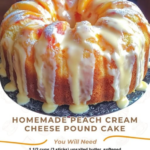
The Peach Buttermilk Pound Cake is a triumph of culinary chemistry. By understanding how the lactic acid of the buttermilk interacts with the gluten in the flour and the lipids in the butter, you can engineer a cake that is simultaneously rich and airy. It is a dish that rewards patience during the creaming phase and gentleness during the folding phase. When the peaches soften in the oven, releasing their sugars into the acid-tenderized crumb, the result is a 2026 masterpiece of Southern-style baking.
Frequently Asked Questions
Q: Can I use a buttermilk substitute (milk + lemon juice)?
A: In a pinch, yes. However, real buttermilk is thicker and contains emulsifying proteins that a “fake” buttermilk lacks. The texture will be slightly less velvety.
Q: Why did my peaches sink?
A: In a buttermilk batter, the structure is slightly lighter than a cream cheese batter. Toss your peach chunks in a little flour to give them “traction” so they stay suspended.
Q: Can I bake this in a loaf pan?
A: Yes, but this volume of batter usually requires two standard loaf pans. Adjust your baking time to 50–60 minutes and check with a skewer for doneness.
Would you like me to help you create a “Buttermilk Syrup” to pour over the cake while it’s hot, or perhaps suggest a pairing with a specific type of artisanal tea?