
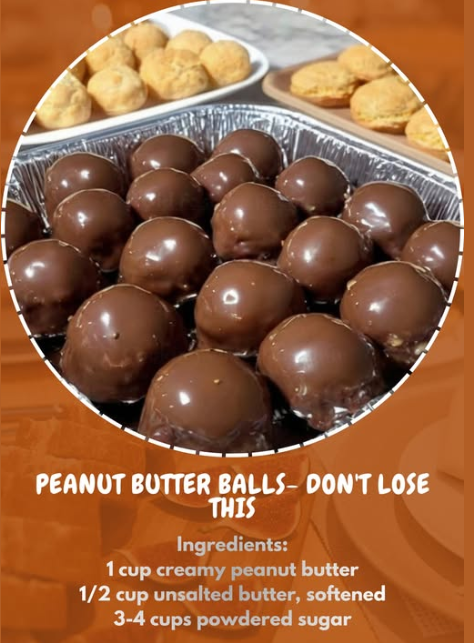
Peanut Butter Balls: A Study in Cold-Phase Confectionery
Introduction: The Physics of “Buckeye” Structural Integrity
In the world of no-bake confectionery, Peanut Butter Balls represent a triumph of Solid-in-Lipid Suspension. On this Thursday, December 25, 2025—Christmas Day—this treat serves as a high-density energy source and a festive staple. The technical success of this dish relies on the Capillary Action of powdered sugar, which wicks away free oils from the peanut butter to create a non-sticky, malleable matrix. The final “snap” of the chocolate coating provides a Thermal Barrier, preventing the inner lipid core from oxidizing or softening prematurely.
Ingredients: The Molecular Building Blocks
- 1 ½ Cups Creamy Peanut Butter: The Primary Lipid Matrix. The roasted peanut oils provide the carrier for all other flavors. For structural consistency, stabilized (non-natural) peanut butter is preferred to avoid Phase Separation.
- ½ Cup Unsalted Butter (Softened): The Structural Hardener. Butter contains saturated fats that solidify at room temperature, providing the “bite” and preventing the balls from collapsing into puddles.
- 3 – 4 Cups Powdered Sugar (Sifted): The Hygroscopic Bulking Agent. The fine particle size of the sugar ensures a smooth mouthfeel, while the cornstarch content helps stabilize the fats.
- 1 tsp Vanilla Extract: The Alcohol-Based Aromatic. Vanilla provides a complex scent profile that balances the earthy, roasted notes of the legumes.
- 12 oz Semi-Sweet Chocolate Chips: The Crystalline Shell. When melted and cooled, the chocolate forms a Polymorphic Structure that provides a satisfying mechanical “snap.”
- 1 tbsp Coconut Oil or Shortening: The Viscosity Modifier. This thins the chocolate, reducing its surface tension for a smoother, thinner coating.
