
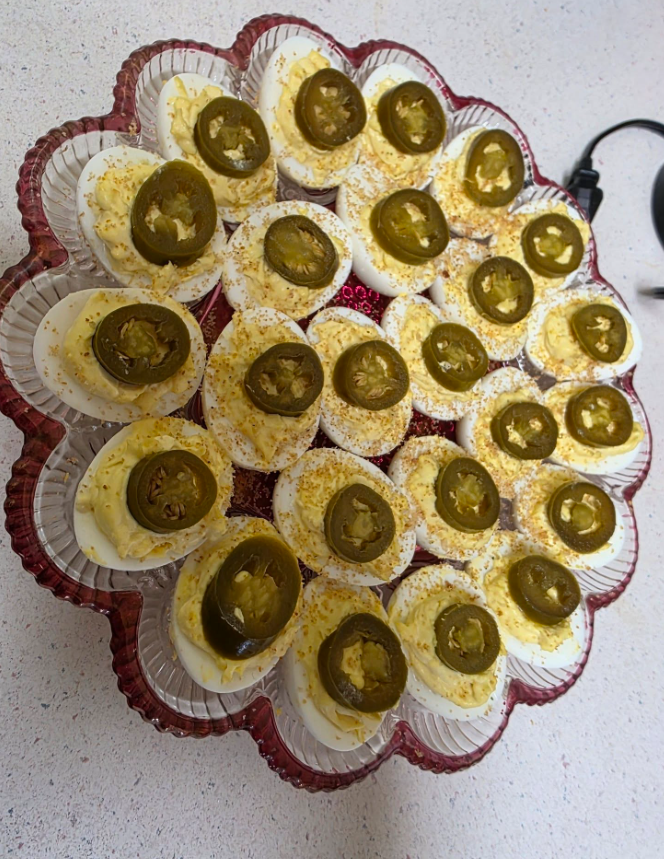
The Brine-Infused Protocol
Scientific Engineering of the High-Performance Pickle Deviled Egg
Introduction: The Alchemy of Acid and Lipid
In the culinary landscape of 2026, the deviled egg has undergone a fundamental reassessment. No longer viewed as a passive potluck side dish, the modern deviled egg is now treated as an exercise in lipid-acid equilibrium. The standard version of this dish often suffers from “palate fatigue”—a sensation where the heavy fats of the yolk and mayonnaise overwhelm the taste buds after a single bite. The Pickle Deviled Egg solves this through the strategic implementation of fermented acidity.
The regulation of this dish hinges on acetic intervention. By introducing finely diced lacto-fermented cucumbers and their accompanying brine, we achieve a chemical reaction known as “denaturation,” which lightens the protein structure of the yolk. This results in a filling that is aerated and bright, rather than dense and heavy. The pickle doesn’t just provide flavor; it provides structural clarity. In the following article, we will detail the rigid culinary standards required to produce a deviled egg that balances the richness of the farm with the sharp, electrified snap of the brine jar.
The Provision List: Ingredients
The Protein Foundation:
- 6 Large Grade A Eggs: Ideally 7–10 days old for optimal peeling.
- 3 tbsp High-Quality Mayonnaise: The lipid binder that ensures a smooth emulsion.
The Fermented Core:
- 2 tbsp Dill Pickles: Minced to a 2mm consistency.
- 1 tsp Pickle Brine: Cold-pressed from the jar.
- 1 tsp Yellow Mustard: For color stabilization and sharp top notes.
- Smoked Paprika: For garnish.
