
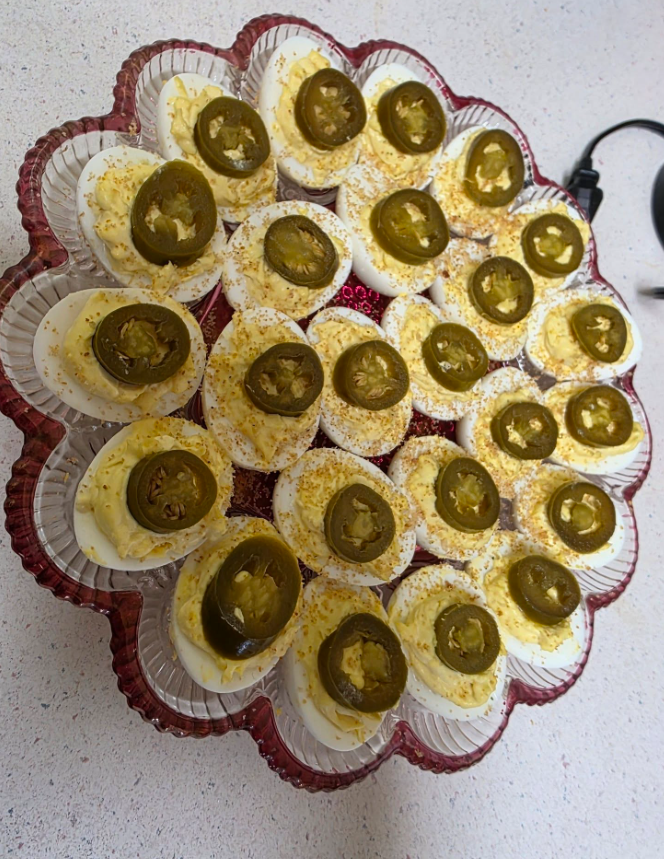
Submerge your eggs in a pot of cold water. Bring to a rolling boil. Once boiling, cover the pot and remove from heat immediately. Let sit for exactly 12 minutes.Regulation: Immediately transfer eggs to a 50/50 ice-and-water bath for 6 minutes. This “Thermal Shock” stops the cooking process instantly, preventing the formation of ferrous sulfide (the gray-green ring) around the yolk.
Peel and halve the eggs lengthwise. Extract the yolks into a chilled stainless steel bowl. Using a fork or a fine-mesh sieve, pulverize the yolks until they reach a sandy, consistent texture.Add the mayonnaise, mustard, and the reserved pickle brine. Whisk vigorously until the mixture achieves a High-Viscosity Mousse state. The brine acts as the liquid catalyst here, ensuring the fats don’t become cloying.
Gently fold the minced pickles into the yolk mousse using a rubber spatula.Note: Do not use a whisk for this step. The mechanical action of a whisk will bruise the pickle bits and release excess water, which can lead to “weeping” of the filling later.
Transfer the mixture to a piping bag fitted with a large star tip. Fill each egg white cavity with approximately 1.5 tablespoons of the mixture. Dust with smoked paprika from a height of 10 inches to ensure a uniform “flavor mist” rather than clumps.
Serving and Storage: The Safety Standards
Deviled eggs are highly sensitive to temperature fluctuations. Adhering to the 2026 Food Safety Regulations ensures the integrity of the mayonnaise-egg emulsion.
| Environment | Longevity | Optimal Surface |
|---|---|---|
| Refrigerated (Covered) | 48 Hours | Airtight glass container to prevent odor absorption. |
| Ambient Room Temp | 2 Hours | Served on a chilled ceramic platter. |
| Outdoor/Picnic | 60 Minutes | Must be placed on an ice-bed tray. |
Tips: The Secret of Palate Clarity
- The Sieve Secret: For a true restaurant-grade texture, push your dry yolks through a fine-mesh sieve before adding wet ingredients. This eliminates all clumps.
- The Brine Ratio: Always add brine 1/2 teaspoon at a time. Over-saturation will result in a runny filling that won’t hold its shape when piped.
- Pickle Selection: Avoid “Refrigerated” pickles for the filling as they often contain too much moisture. Use shelf-stable, fermented dills for a more concentrated flavor.
Variations: Adjusting the Flavor Matrix
- The “Fire-Brine” Egg: Substitute standard dills for “Spicy Garlic” pickles and add a dash of habanero hot sauce to the yolk emulsion.
- The Sweet-Sour Emulsion: Use “Bread and Butter” pickles and replace the yellow mustard with Dijon for a more sophisticated, sugary-acid profile.
- The Everything Pickle: Top the piped eggs with “Everything Bagel” seasoning (sesame seeds, poppy seeds, dried garlic) for a secondary layer of crunch.
Tips: Troubleshooting the Peel
The most common failure in deviled egg preparation occurs during the peeling phase. To ensure the egg whites remain smooth and “pearl-like,” always crack the shell at the wide end (the air cell) first. Peel the eggs under a gentle stream of cool running water. The water acts as a lubricant, allowing the membrane to slip off the white without tearing the protein surface.
Conclusion: The Future of the Deviled Egg
The Pickle Deviled Egg represents a shift toward more intentional, technically-driven appetizer design. By respecting the chemical properties of the pickle brine and the structural needs of the egg yolk, you create a dish that is far more than the sum of its parts. In 2026, we value the “Snap” of the pickle just as much as the “Cream” of the egg. By following these rigorous instructions and serving regulations, you guarantee a culinary result that is balanced, professional, and undeniably addictive. Enjoy the evolution of the classic!
Frequently Asked Questions
- Why do my eggs have a green ring around the yolk?
- This is caused by overcooking or failing to use an ice bath. The iron in the yolk reacts with the sulfur in the white. Stick strictly to the 12-minute rule.
- Can I use relish instead of chopped pickles?
- You can, but relish often contains high amounts of sugar and liquid. If using relish, reduce the added brine and sugar in the recipe to maintain the savory regulation.
- Is it better to pipe or spoon the filling?
- Piping is superior. Not only does it look professional, but it also prevents you from over-working the yolk mousse, keeping the texture light and airy.
- How do I keep the eggs from sliding on the plate?
- Slice a tiny sliver off the bottom of each egg white half. This creates a “flat dock” that keeps the egg stable during transport and service.