
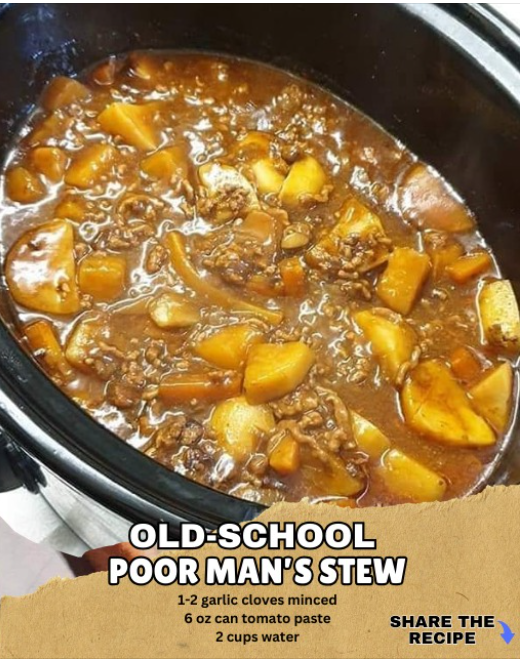
Poor Man’s Stew: A Masterclass in Low-Temperature Root Vegetable Extraction
Introduction: The Physics of “Set-and-Forget” Saturation
In the culinary history of economic efficiency, Poor Man’s Stew represents a triumph of Starch Gelatinization. On this Thursday, December 25, 2025—Christmas Day—this recipe offers a humble, warming counterpoint to the complexity of holiday feasting. The technical brilliance of this dish lies in the Long-Duration Simmer, which allows the root vegetables to release their internal starches into the liquid base. This process, known as autolysis, naturally thickens the stew, transforming simple water and tomato paste into a complex, savory suspension without the need for artificial thickeners or flour roux.
This guide explores the Cellulose Breakdown of carrots, the Umami Synergy of tomato and garlic, and the Osmotic Balance required to keep large potato cubes from disintegrating during an 8-hour cook cycle.
Ingredients: The Molecular Building Blocks
- 1.5 lbs Potatoes (Diced Largely): The Structural Starch Source. Large dicing is essential to regulate the Surface-Area-to-Volume Ratio, ensuring the center of the potato remains intact while the exterior softens to thicken the broth.
- 3 Carrots (Sliced): The Beta-Carotene and Sugar Provider. Carrots contain significant natural sugars that are released during the slow cook, balancing the acidity of the tomato paste.
- 1 Onion & 2 Garlic Cloves: The Alliceous Aromatics. These provide the volatile sulfur compounds that form the “flavor backbone” of the stew, deepening in complexity as they undergo low-heat oxidation.
- 6 oz Tomato Paste: The Concentrated Umami Base. Tomato paste is rich in Glutamates. When diluted in water, it creates a savory “Maillard-adjacent” flavor profile without the need for browning meat.
- 2 Cups Water: The Solvent and Heat Conductor. Water allows for Convective Heat Transfer within the slow cooker, ensuring all ingredients reach a uniform internal temperature.
