Step 1: The Aromatic Foundation
Place the onions and garlic at the bottom of the slow cooker. The “Thermal Shield” Science: The bottom of the slow cooker is the primary heat source. Placing aromatics here ensures they reach the Sweating Point earliest, releasing their essential oils into the moisture of the vegetables above.
Step 2: The Starch Layering (Potatoes and Carrots)
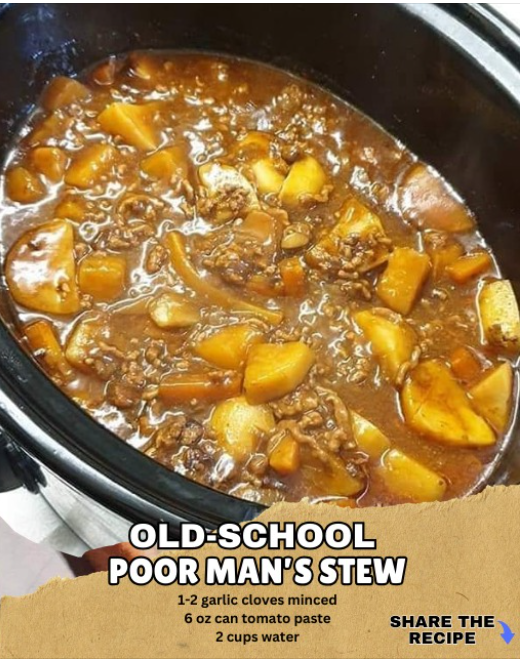
Layer the largely diced potatoes and carrots over the aromatics. The “Mechanical Support” Rule: Potatoes should be diced into roughly 1.5-inch cubes.
This size ensures that the Pectin holding the cells together doesn’t fully dissolve before the cooking cycle is complete.
Step 3: The Tomato-Water Suspension
Whisk the tomato paste into the 2 cups of water before pouring over the vegetables. The “Homogenization” Requirement: Never drop the paste in as a solid lump. By pre-diluting it, you create a Colloidal Solution that penetrates the crevices of the vegetables evenly, ensuring consistent flavor diffusion.
Step 4: The Low-Temperature Braise
Set the slow cooker to “Low” for 7–8 hours (or “High” for 4 hours). The “Enzyme Inactivation” Physics: Cooking on “Low” allows the temperature to rise slowly, which keeps the vegetable cell walls firmer for longer.
This long, slow climb to the Simmering Point (approx. 209°F) results in a superior, velvety texture compared to the aggressive boiling of a stovetop method.
Step 5: The Final Thickening (Optional)
If a thicker consistency is desired, crush two or three of the cooked potato cubes against the side of the pot and stir them back in. The “Starch Release” Secret: This releases Amylose directly into the liquid, instantly increasing the viscosity of the stew through mechanical agitation.
Serving and Storage: The Flavor Equilibrium
Serving: Serve warm in deep bowls. The “Retronasal” Experience: The steam from the stew carries the volatile aromas of the garlic and onion directly to the olfactory receptors, which is why this stew often “smells” better than it looks.
Storage: This stew is arguably better on Day 2. The “Flavor Maturation” Factor: During refrigeration, Molecular Diffusion continues. The flavors of the tomato and onion finish penetrating the center of the potato cubes, creating a unified taste profile that is impossible to achieve in a single day.
Tips: Pro-Level “Poor Man” Nuances
- The “Salt” Regulation: Do not salt the stew until the final hour of cooking. Salt can inhibit the softening of the legumes and root vegetables if introduced too early in a slow-cook environment.
- Tomato Paste Quality: Use a “Double Concentrated” paste if available. This provides a higher Brix Level (sugar content), which results in a deeper, more mahogany-colored sauce.
- The “Water” Swap: For more depth, replace 1 cup of water with vegetable or beef broth. This adds Nucleotides that amplify the umami of the tomato paste.
Holiday Variations: Seasonal Infusions
| Variation | The Adjustment | The Vibe |
|---|---|---|
| The “Rich Man” Upgrade | Add 1 lb of browned ground beef or stew meat. | Protein-heavy, hearty, and traditional. |
| Winter Herb Infusion | Add a sprig of fresh rosemary and 2 bay leaves. | Piney, aromatic, and festive. |
| Smoky Cabbage Stew | Add 2 cups of shredded cabbage and 1 tsp of smoked paprika. | Earthy, sweet, and complex. |
Tips: Preventing the “Mush” Factor
If your vegetables are turning into a purée, your slow cooker may be running too hot. Many modern slow cookers have “Low” settings that are actually quite high. To regulate this, ensure the pot is at least two-thirds full. The mass of the vegetables and water acts as a Thermal Heat Sink, slowing the temperature rise and protecting the structural integrity of the potatoes.
Conclusion: A Christmas Day Victory for the Senses
Poor Man’s Stew is a masterpiece of Resource Optimization. By utilizing the time-temperature relationship of a slow cooker, you transform the most basic pantry staples into a dish with remarkable depth and texture. On this Christmas Day 2025, as the savory scent of tomato and garlic fills your home, you are serving a masterclass in culinary patience. Enjoy the warmth!
Frequently Asked Questions
- Can I use a Dutch Oven instead?
- Yes. Use the same ingredients but cook in a 300°F (150°C) oven for about 3-4 hours. The Conductive Heat of the heavy iron pot will achieve similar results to the slow cooker.
- Why is my stew acidic?
- This is due to the pH of the Tomato Paste. To balance it, stir in a pinch of sugar or a teaspoon of butter at the end. The fats and sugars will neutralize the sharp acidic notes.
- Can I use frozen vegetables?
- Yes, but add them in the last 2 hours of cooking. Frozen vegetables have already had their Cell Walls Damaged by ice crystals, so they will turn to mush if cooked for the full 8 hours.
Would you like me to suggest a “Jalapeño Cornbread” recipe to serve with this stew, or perhaps show you how to turn the leftovers into a “Shepherd’s Pie” filling?