
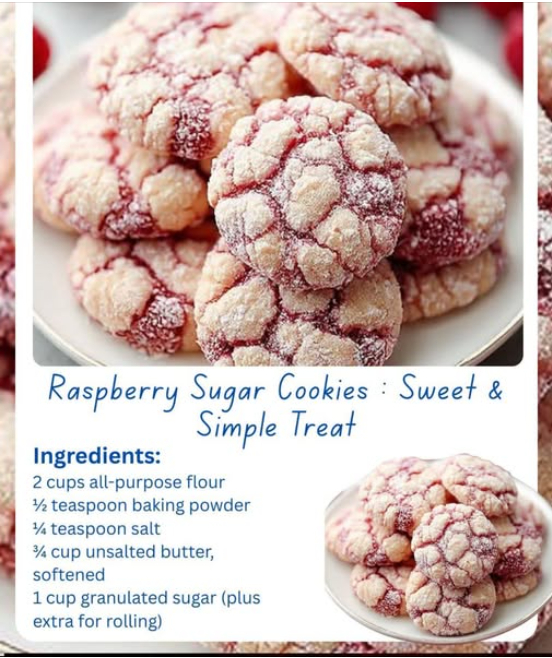
Raspberry Sugar Cookies: The Science of the “Short” Crumb
Introduction: Engineering the Perfect Fruit-Infused Cookie
In the world of pastry, a sugar cookie is defined by its Shortness—a term referring to the way the dough breaks or crumbles when bitten. Today, on Wednesday, December 24th, 2025—Christmas Eve—these Raspberry Sugar Cookies offer a sophisticated, tart alternative to the heavy spice profiles of gingerbread. The challenge with fruit cookies is managing Moisture Migration; too much juice makes a muffin, while too little makes a dry cracker.
This guide will explore the Aeration of Butter, the Double-Leavening System of baking powder and soda, and the chemistry of Ketones in raspberry flavor profiles. We will look at why Room Temperature Eggs are a requirement for a stable emulsion.
Ingredients: The Molecular Building Blocks
- 3/4 Cup Unsalted Butter (Softened): Butter is a Plastic Fat. At room temperature, it is soft enough to be beaten, allowing sugar crystals to tear tiny air pockets into it. These pockets are the “caves” that hold the CO2 produced by the leaveners.
- 1 Cup Granulated Sugar: Sugar is a Hygroscopic Tenderizer. It pulls water away from the flour proteins, preventing them from forming tough gluten. This keeps the cookie soft and chewy.
- The Raspberry Matrix (Extract vs. Jam): Raspberry flavor is primarily driven by raspberry ketone. Using extract provides this flavor without adding water. If using Seedless Jam, the pectin in the fruit acts as an additional binder, creating a “jammy,” slightly denser chew.
- Baking Powder & Baking Soda: This is a Dual-Action System. Baking soda (sodium bicarbonate) provides an immediate lift when it hits the acidic components (like raspberry extract or jam), while baking powder provides a “time-release” lift during the heat of the bake.
- 2¼ Cups All-Purpose Flour: This provides the Structural Scaffold. At 280g, this ratio of flour to fat ensures the cookie spreads slightly but maintains its circular integrity.
