
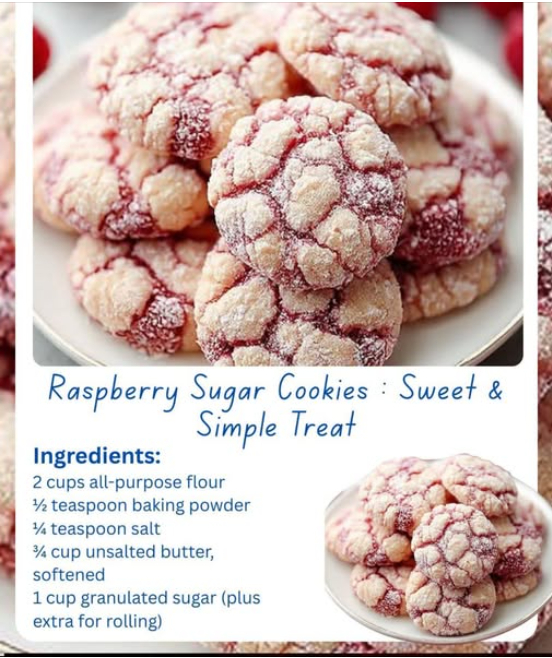
Phase 1: The Creaming Emulsion
Beat the softened butter and sugar for 3 full minutes. You are looking for a “Pale and Fluffy” state. The “Room Temp” Rule: Add your egg only when it is at room temperature. A cold egg will “seize” the fat in the butter, causing the batter to look curdled and resulting in a dense cookie.
Phase 2: The Aromatic Infusion
Add the vanilla and raspberry extracts. The “Flavor Bridge” Secret: Vanilla contains vanillin, which shares a similar molecular structure to raspberry aromatics. The vanilla doesn’t just add flavor; it “boosts” the brain’s perception of the raspberry, making it taste more “real.”
Phase 3: The Sift and Fold
Whisk your dry ingredients (flour, powder, soda, salt) before adding them to the wet. This ensures the leaveners are perfectly distributed. The “Gluten Guard”: Mix the flour in just until no white streaks remain. Every rotation of the mixer after that point develops gluten, which will turn your cookie from “melt-in-your-mouth” to “tough.”
Phase 4: The Hydration Chill
Wrap the dough and chill for at least 30 minutes. The “Molecular Set” Secret: During the chill, the flour starches fully hydrate, absorbing the moisture from the egg and extracts. This prevents the cookies from spreading too much in the oven and ensures a more concentrated flavor.
Phase 5: The “Low-Spread” Bake
Bake at 350°F (175°C). The “Carry-Over” Rule: Take the cookies out when the edges are just barely golden, but the centers still look slightly “under-baked.” The cookies will continue to cook on the hot baking sheet for 2 minutes after leaving the oven. This is the secret to a professional, soft-centered sugar cookie.
The Science: Managing the “Red” Hue
The red color in raspberries comes from Anthocyanins. These pigments are highly sensitive to pH levels. If your dough is too alkaline (too much baking soda), the raspberry color can turn a dull brownish-purple. By balancing the soda with baking powder (which contains its own acid), we maintain a neutral-to-slightly-acidic environment, keeping the cookies looking pink and vibrant.
Chef’s Tips for a Professional Finish
- The “Jam Swirl”: If using jam instead of extract, do not over-mix it. Leave visible “streaks” of jam in the dough for a beautiful, marbled appearance.
- Uniformity: Use a cookie scoop (1.5 tbsp size). Uniform size ensures that all cookies bake at the exact same rate, preventing some from being burnt while others are raw.
- Freeze the Dough: These cookies freeze beautifully. You can scoop the dough into balls, freeze them, and then bake them directly from the freezer—just add 1-2 minutes to the bake time.
Holiday Variations
| Variation | The Twist | The Vibe |
|---|---|---|
| White Chocolate Raspberry | Add 1/2 cup white chocolate chips. | Creamy, sweet, and classic. |
| Lemon-Raspberry | Add 1 tsp Lemon zest to the dough. | Bright, zesty, and refreshing. |
| Sparkling Sugar | Roll the dough balls in coarse sanding sugar. | Festive, crunchy, and “snow-covered.” |
Conclusion: A Bright Christmas Eve Treat
Raspberry Sugar Cookies are a testament to the balance of delicate fruit flavors and sturdy pastry science. By managing the creaming of the butter and the pH of the leaveners, you create a cookie that is visually stunning and technically perfect. On this Christmas Eve 2025, as these pink, aromatic cookies come out of the oven, you’re serving more than just a sweet; you’re serving a masterclass in fruit-infused baking. Enjoy every tart and tender bite!
Frequently Asked Questions
- Can I use fresh raspberries?
- I don’t recommend it for this specific sugar cookie base. Fresh berries release too much water, which will turn the dough into a “cakey” texture and potentially make it blue-grey due to the pH shift. Use extract or jam for the best results.
- Why did my cookies go flat?
- This usually happens if the butter was too soft (melted) or if the dough wasn’t chilled. If the fat is already a liquid when it hits the oven, it won’t hold the air pockets, and the cookie will collapse.
- Can I use salted butter?
- Yes, but omit the 1/4 tsp of salt listed in the recipe. Unsalted butter is preferred in baking because it allows the baker to control the exact sodium level, but salted is a fine substitute in a pinch.
Would you like me to suggest a “Raspberry Royal Icing” recipe to decorate these cookies, or perhaps show you how to turn this dough into “Raspberry Thumbprints”?
Related posts:
 Mastering Raspberry Shortbread Thumbprint Cookies
 The Ultimate Guide to Ultra-Soft Raspberry Christmas Snow Clouds
 The Ultimate Guide to Raspberry Almond Shortbread Thumbprint Cookies
 The Ultimate Guide to Soft Cut Out Sugar Cookies
 The Art of the Swirl: Mastering Blueberry Cheesecake Cookies
 Classic Raspberry Shortbread Thumbprint Cookies
