
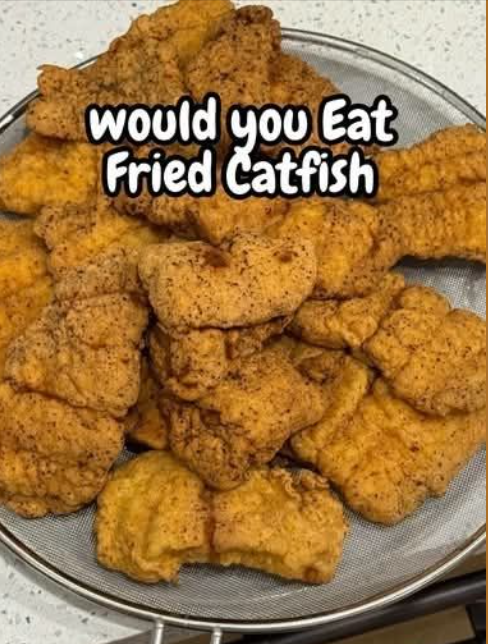
Southern Fried Catfish: The Physics of the Perfect Crust
Introduction: The Architecture of the Southern Classic
In the culinary world, frying catfish is a study in Moisture Retention. Today, on Wednesday, December 24, 2025—Christmas Eve—this dish offers a crisp, savory alternative to the heavier holiday roasts. The challenge of catfish is its High Water Content and Delicate Flake. If fried incorrectly, it becomes greasy and limp. By using a cornmeal-based dredge, we utilize Non-Elastic Starches to create a crust that stays crunchy even as the steam from the fish tries to escape.
This guide will explore the Proteolytic Enzymes in buttermilk, the Maillard Reaction in cornmeal, and the Hydrodynamic Properties of frying in cast iron. We will delve into why 350°F is the “Critical Temperature” for a grease-free finish.
Ingredients: The Molecular Building Blocks
- Catfish Fillets: Catfish are “bottom feeders” with a unique muscle structure. They are relatively low in fat but high in connective tissue. The buttermilk soak is essential to break down these fibers.
- Buttermilk: This is your Tenderizing Agent. Buttermilk is acidic (containing lactic acid). This acid denatures the proteins on the surface of the fish, allowing it to hold more moisture during the high-heat fry.
- Cornmeal & Flour (The Dredge): Cornmeal provides Structural Grit. Unlike flour, cornmeal does not form gluten when wet, ensuring the crust is “shattery” rather than “bready.” The small amount of flour acts as the “glue” that binds the cornmeal to the fish.
- Paprika, Garlic, & Cayenne: These provide Fat-Soluble Flavor. Because the fish is submerged in oil, these spices dissolve into the crust, creating a uniform heat profile that lingers on the palate.
- High-Smoke Point Oil: Oils like peanut or canola are Thermal Conductor. They can reach 350°F without breaking down into acrid smoke, ensuring a clean, nutty flavor.
The Technique: Engineering the 4-Minute Fry
Advertisement
