
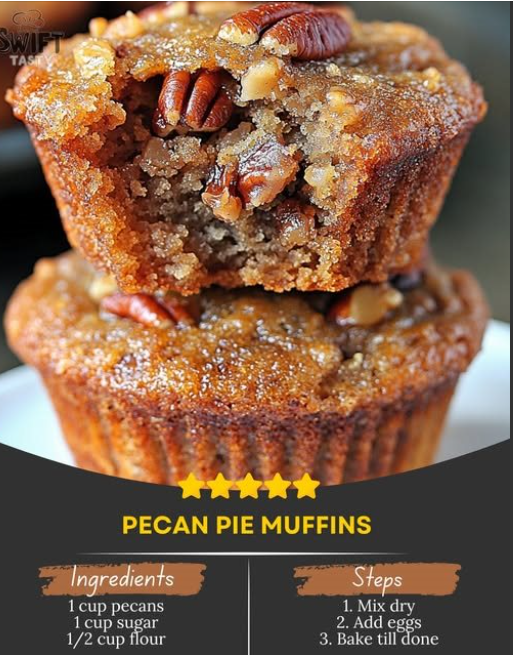
Structural Analysis of Pecan Pie Muffins: A Study in Caramelization
Introduction: Engineering the Chewy Matrix
The Pecan Pie Muffin is a hybrid culinary structure. It eschews the traditional leavening agents found in standard muffins (like baking powder) in favor of egg protein coagulation and sugar dehydration. The resulting texture is a dense, fudge-like core surrounded by a thin, brittle exterior—a direct result of the Maillard Reaction and the Glass Transition of the sugar components.
In this analysis, we focus on the role of lipids (from the butter and pecans) in inhibiting gluten development, ensuring the muffin remains tender rather than bread-like. By utilizing a high ratio of brown sugar to flour, we promote a moist environment that prevents the crumb from drying out during the intense radiant heat of the oven.
Ingredients: The Molecular Building Blocks
1. The Carbohydrate Framework
- 1 cup Packed Brown Sugar: The primary humectant. Brown sugar contains molasses, which contributes invert sugars that inhibit large crystal formation, resulting in a “chewier” texture.
- 1/2 cup All-Purpose Flour: The structural aggregate. This is used in a minimal quantity to barely bind the proteins and lipids together.
2. The Lipid and Protein Binding System
- 1 cup Chopped Pecans: Provides mechanical crunch and monounsaturated fats. The oils in the pecans leach slightly into the batter during baking, enhancing the richness.
- 2 Large Eggs: The emulsifier and structural set. The proteins in the egg whites provide the “lift” and “hold,” while the yolks provide lecithin for a smooth emulsion.
- 1/2 cup Unsalted Butter, Melted: The continuous lipid phase that coats the flour particles, preventing excessive gluten formation.
