
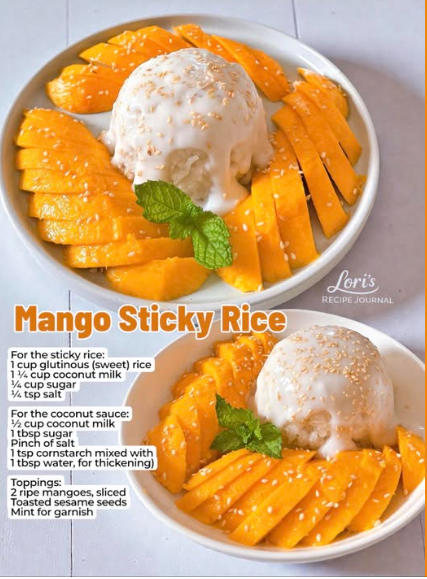
The Art of Authentic Mango Sticky Rice
Discover the secrets to Thailand’s most beloved dessert.
Beyond the Bowl: What Makes Sticky Rice “Sticky”?
Mango Sticky Rice is more than just a combination of ingredients; it is a balance of the four pillars of Thai cuisine: sweet, salty, creamy, and fresh. To achieve the perfect result, you must understand your primary grain: Glutinous Rice (also known as Sweet Rice or Sticky Rice).
Unlike standard long-grain jasmine rice, glutinous rice contains a very high amount of amylopectin and negligible amylose. When steamed, these starch molecules create a sticky, chewy bond that allows the rice to absorb the coconut milk like a sponge without turning into mush. If you use regular white rice, you will end up with a pudding rather than the distinct, individual grains that define this dish.
The Ingredient Checklist
For the Sticky Rice
- 1 Cup Glutinous (Sweet) Rice: Look for “Thai Long Grain Sticky Rice.”
- 1 ¼ Cup Coconut Milk: Use full-fat canned coconut milk for the best mouthfeel.
- ¼ Cup White Sugar: Adjust slightly depending on your sweetness preference.
- ¼ tsp Salt: Essential to contrast the sweetness of the mango.
For the Coconut Sauce & Topping
- ½ Cup Coconut Milk: Reserved for the final drizzle.
- 1 tbsp Sugar: To lightly sweeten the sauce.
- Pinch of Salt: To highlight the coconut’s nuttiness.
- 2 Ripe Mangoes: Preferably Ataulfo (Honey) or Nam Dok Mai.
- Optional: Toasted mung beans or sesame seeds for crunch.
