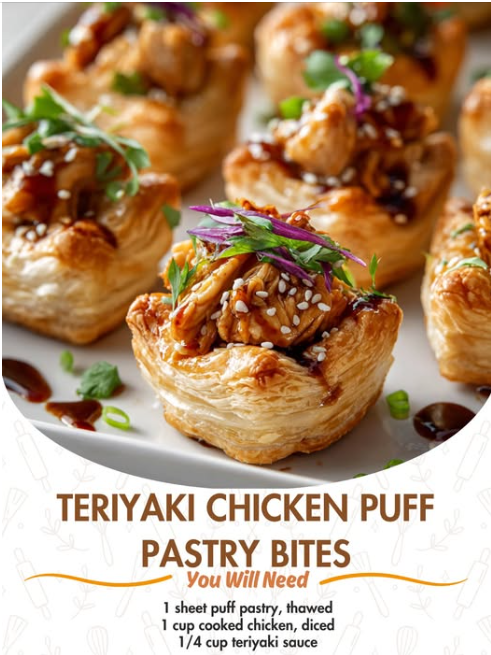
Step 1: Segmenting the Matrix
Preheat your oven to 400°F (200°C). Unroll the chilled puff pastry and cut it into 24-36 equal squares. The “Clean Cut” Rule: Use a very sharp knife or pizza cutter. A dull blade “smushes” the layers together at the edges, effectively welding the puff shut and preventing expansion.
Step 2: Coating the Protein
Toss the diced chicken in the teriyaki sauce. Viscosity Regulation: If the sauce is too watery, simmer it for 3 minutes to reduce it to a syrup-like consistency. This ensures Capillary Retention on the chicken cubes rather than runoff onto the dough.
Step 3: The Assembly Protocol
Place the pastry squares into a mini-muffin tin (to create “cups”) or on a flat parchment-lined tray. Place a small cluster of chicken in the center of each. Brush the exposed pastry edges with the egg wash. This facilitates the Maillard Reaction, resulting in a deep amber color.
Step 4: Thermal Processing (The Bake)
Bake for 12–15 minutes. Watch for the Laminar Lift. The high heat causes the internal moisture to vaporize instantly, driving the layers apart before the gluten proteins “set” into a rigid, crispy structure.
Serving and Storage: Post-Bake Stabilization
Service: Serve warm. As the bites cool, the sugar in the teriyaki sauce may become slightly tacky. A sprinkle of fresh green onions adds Chlorophyll Brightness to balance the heavy umami of the sauce.
Storage: Puff pastry is highly Hygroscopic (it absorbs moisture from the air). Store in a ventilated container for 24 hours. To restore crispness, reheat in a 350°F oven for 5 minutes. Avoid the microwave, as it will vibrate water molecules and make the pastry soft and rubbery.
Tips: Pro-Level Pastry Nuances
- The “Cold Pan” Trick: If you are making multiple batches, ensure your baking tray has cooled completely before placing the next round of pastry on it. A warm tray will prematurely melt the butter layers.
- Internal Sealing: For extra protection against sogginess, sprinkle a tiny amount of breadcrumbs or grated Parmesan on the dough before adding the chicken. They act as a Moisture Buffer.
- Acidic Balance: A tiny squeeze of lime or ginger juice in the teriyaki sauce can help cut through the richness of the pastry’s fat.
Variations: Iterative Design Adjustments
| Variation | The Adjustment | The Result |
|---|---|---|
| Spicy Teriyaki | Add 1 tsp Sriracha or chili flakes. | Enhanced Capsaicin volatility. |
| Creamy Teriyaki | Add 1 tbsp Cream Cheese to the chicken mix. | Higher Lipid Density and smoother melt. |
| Pineapple Express | Add 1 small piece of fresh pineapple. | Introduces Proteolytic Enzymes and sweetness. |
Tips: Optimizing the Visual Finish
Conclusion: A Triumph of Thermal Dynamics
The Teriyaki Chicken Puff Pastry Bite is more than an appetizer; it is a successful exercise in Material Science and Heat Management. By respecting the cold-chain requirements of the dough and managing the viscosity of the glaze, you create a dish that is both structurally impressive and flavor-dense. On this December 27, 2025, enjoy your perfectly engineered bites. Happy baking!
Would you like me to suggest a “Wasabi Crema” to drizzle over these for a spicy finish, or show you how to make “Teriyaki Beef” versions?