
The Golden Legacy: A Study in Symbolic Wealth and Winter Nutrition
Introduction: The Physics of a Winter Treasure
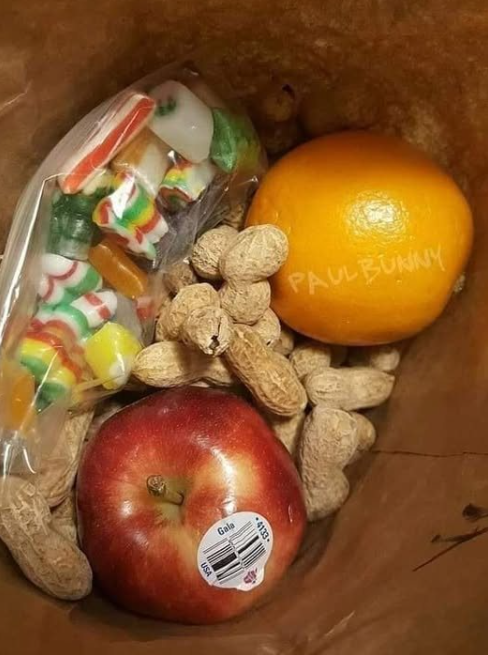
This image captures a beautifully traditional “Stocking Stuffer” bag, a poignant reminder of holiday customs that prioritize historical meaning and seasonal rarity over modern gadgets. The collection—featuring a Gala apple, an orange, a bag of hard candies, and whole peanuts—is a masterclass in biological and cultural preservation. By choosing these specific items, the “St. Nicholas” tradition utilizes natural encapsulation (the peels of the fruit and shells of the nuts) to provide a fresh, nutrient-dense gift during the peak of winter.
The story within this bag is one of tradition, resilience, and the historical value of simple gifts. This specific arrangement represents a legacy that stretches from ancient legends to the economic hardships of the 20th century.
The Legend of St. Nicholas: From Gold to Citrus
The inclusion of an orange in a Christmas stocking is deeply rooted in the legendary generosity of St. Nicholas. According to historical lore, Nicholas sought to aid three daughters whose father lived in extreme poverty and could not afford their dowries. To save them from a dire future, Nicholas secretly threw three bags of gold through their window. Legends vary, suggesting the gold either landed in shoes or in stockings hanging by the fire to dry.
As this story evolved through the centuries, the orange became a sun-like, valuable treasure that represented these golden gifts. In the bleakness of winter, a bright orange served as a physical stand-in for the valuable gold spheres of the saint. Because citrus was exceptionally rare in northern winters, the fruit itself became a form of “simple wealth”.
