
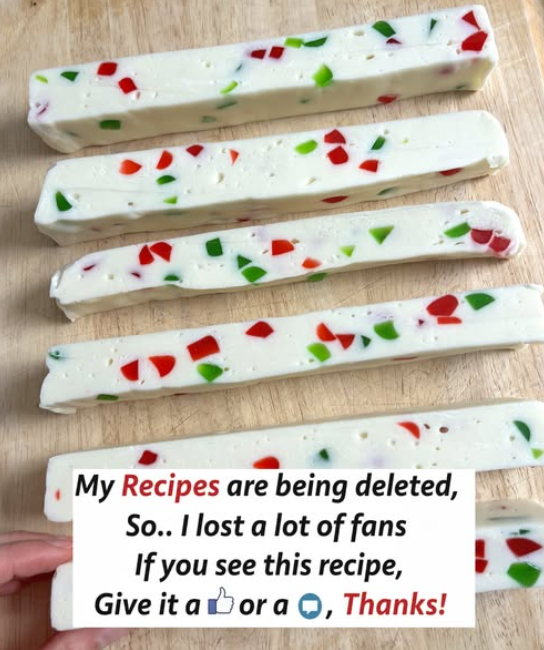
Transformation
Step 1: The Preparation (The Most Important Step)
Candy making happens fast once the sugar reaches the right temperature. You must have your pans greased and your tools ready before you turn on the heat.
- Line a baking sheet with parchment paper or a silicone mat.
- Butter the sides of a heavy-bottomed saucepan to prevent sugar crystals from climbing the walls.
Step 2: Dissolving the Sugar
- Combine the **sugar, corn syrup, and water** in the saucepan.
- Stir over medium heat until the sugar is completely dissolved. Once the mixture begins to boil, stop stirring. Stirring a boiling sugar syrup can cause it to crystallize and turn into a hard, grainy mess.
Step 3: Watching the Thermometer
- Clip a candy thermometer to the side of the pan.
- Continue boiling until you reach the desired stage (usually **Hard Crack Stage: $300^{\circ}\text{F}$ to $310^{\circ}\text{F}$** for hard candies or **Soft Ball Stage: $235^{\circ}\text{F}$** for fudges and caramels).
- Immediately remove from heat once the temperature is reached.
Step 4: The Final Flourish
- Carefully stir in the **butter, vanilla, and salt**. The mixture will bubble and hiss—this is normal.
- Pour the molten candy onto your prepared sheet. Spread it thin for a “brittle” style or leave it thick for a “toffee” style.
- Let it cool completely at room temperature (do not put it in the fridge, as the humidity can make the candy sticky).
Expert Tips for the Modern Candy Maker
Tip 1: The Cold Water Test
If you don’t have a thermometer, use the old-fashioned way! Drop a small spoonful of the syrup into a bowl of very cold water. If it forms a ball that flattens when you touch it, you’re at “Soft Ball.” If it forms brittle threads that snap, you’re at “Hard Crack.”
Tip 2: Handling Humidity
Sugar is “hygroscopic,” meaning it sucks moisture out of the air. Avoid making candy on a rainy or very humid day, as the candy may never fully set and will remain “tacky” or sticky to the touch.
Tip 3: Cleaning Up the Mess
Hardened sugar in a saucepan can look like a disaster. The trick? Fill the pan with water and bring it to a boil. The water will dissolve the hardened candy in minutes, making cleanup effortless.
Variations: Customizing Your Batch
| Variation | Modification | Best For |
|---|---|---|
| **Sea Salt Toffee** | Add an extra 2 tbsp of butter and top with flaked sea salt. | Adult dinner parties. |
| **Cinnamon Red Hots** | Replace vanilla with 1/2 tsp cinnamon oil and red food coloring. | Holiday gifting. |
| **Grandkids’ Nutty Crunch** | Stir in 1 cup of crushed roasted peanuts before pouring. | Energy-packed snacks. |
| **Chocolate Dipped** | Dip the cooled pieces into melted dark chocolate. | The ultimate indulgence. |
Serving and Storage: Protecting the “Snap”
Because this candy is so popular, it usually doesn’t last long, but proper storage is key to keeping that perfect texture.
- **Storage:** Keep the candy in an airtight container. Use **parchment paper** between layers to prevent the pieces from fusing together.
- **Room Temp:** Store in a cool, dry place. It will remain fresh and crunchy for up to **2 weeks**.
- **Gifting:** This candy looks beautiful in clear cellophane bags tied with a rustic twine—perfect for that “homemade with love” look.
Conclusion: A Tradition Worth Every Stir
Making this old-fashioned candy is a labor of love that pays off the moment you see your grandkids’ faces light up. It is a reminder that the best things in life—and the best treats—often come from a few simple ingredients and a little bit of time spent together in the kitchen. We may not have seen these candies in years, but with recipes like this, we can ensure they are never truly forgotten.
Enjoy every sweet bite!
Frequently Asked Questions
Q: Why did my candy turn out grainy?
A: This usually happens if sugar crystals on the side of the pan were stirred back into the mixture. To prevent this, use a wet pastry brush to wash down the sides of the pan early in the boiling process.
Q: Can I use honey instead of corn syrup?
A: Yes, honey will prevent crystallization, but it will significantly change the flavor and cause the candy to brown much faster. Watch the temperature closely!
Q: My candy is too soft. Can I re-melt it?
A: Yes! You can put it back in the pan with a splash of water, dissolve it again, and bring it up to the correct temperature. Candy making is very forgiving if you have a little extra time.
Related posts:
 The Art and Science of Oklahoma Nut Candy: A Confectionery Masterclass
 Cloud Nine Confection: Mastering the Art of Easy Divinity Candy
 Old Fashioned Christmas Ribbon Candy
 Prairie Perfection
 The Heritage Candy: Mastering the Old-Fashioned Pecan Log
 Confectionery Chemistry: Mastering Old-Fashioned Fudge
