
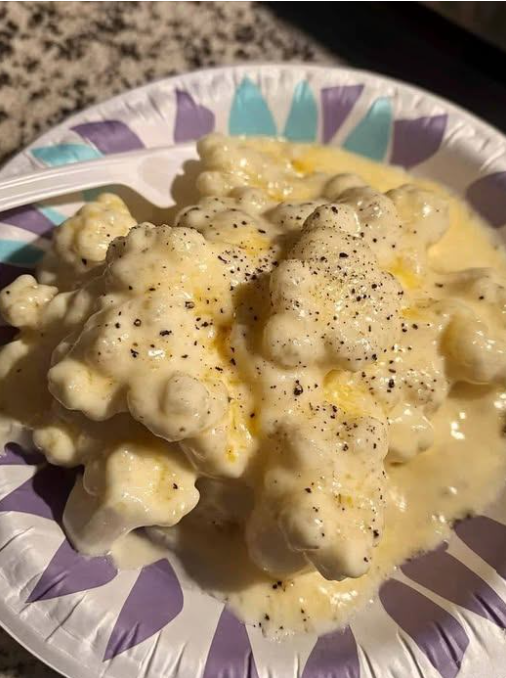
Phase 1: Hydrothermal Preparation
Boil the cauliflower florets in salted water until they reach a state of Al Dente Softness. This step is critical for removing the “raw” sulfurous compounds (glucosinolates) while ensuring the florets retain enough structural integrity to resist turning into a puree during the mixing stage.
Phase 2: Vapor Management (The Drain)
Drain the cauliflower thoroughly. In 2026 culinary standards, Residual Moisture is the primary cause of sauce dilution. Ensure the cauliflower is “steam-dried” for 60 seconds in the colander to allow surface water to evaporate before introducing the lipid matrix.
Phase 3: Lipid Integration and Melting
While the cauliflower is at its Thermal Peak (immediately after draining), introduce the cream cheese, shredded cheese, and sour cream. The residual heat of the vegetable facilitates a conductive melt. Stir gently but thoroughly until the three distinct dairy sources unify into a singular, cohesive emulsion that coats every crevice of the floret.
Serving and Storage: Post-Production Stability
Because this dish lacks traditional flour-based stabilizers, its Viscosity Profile is highly temperature-dependent. It is best served immediately when the emulsion is in its most fluid state.
| Storage Method | Shelf Life | Reheating Strategy |
|---|---|---|
| Refrigerated | 3–4 Days | Microwave at 70% power; stir midway to re-emulsify fats. |
| Frozen | Not Recommended | Freezing ruptures the cauliflower cell walls, leading to a “watery” sauce upon thawing. |
Tips: The Science of “Mouthfeel”
The Salt Regulation: Salt your boiling water heavily. Because cauliflower has a neutral pH and high water content, seasoning the “pasta” from within is essential for flavor depth. Additionally, salt helps break down the pectin in the cauliflower walls, improving the texture.
- The “Size” Standard: Cut the cauliflower into pieces roughly the size of a standard elbow macaroni. Smaller pieces increase the total surface area, allowing for more cheese-to-vegetable contact.
- The Sour Cream Secret: If the sauce feels too thick, add an extra teaspoon of sour cream. The moisture content in the cream acts as a natural “thinner” without introducing the carbs found in milk.
Variations: Adapting the Flavor Profile
While the “Almost Chick-fil-A” standard is the goal, these variations allow for specific dietary tuning:
- The “Au Gratin” Finish: Transfer the mixture to a dish, top with more cheese, and broil for 3 minutes to achieve a Maillard Crust.
- The Spicy Kick: Add 1/4 teaspoon of smoked paprika and a dash of cayenne to the cheese mix for a “Southern-Style” profile.
- The Protein Boost: Stir in leftover grilled chicken nuggets (chopped) to turn this side dish into a complete keto meal.
Tips: Managing “Sauce Breakage”
Technical Note: If your cheese looks “oily” rather than “creamy,” the temperature was likely too high or the mixing too aggressive. To fix a broken sauce, add a tiny splash of heavy cream and stir slowly over very low heat until the emulsion reforms.
Conclusion: The Triumph of the Substitute
The transition from “Grilled Nuggets” at a restaurant to Home-Made Cauliflower Mac is more than a culinary choice; it is a victory of the will over metabolic temptation. By mastering the Lipid-to-Brassica Ratio, the home cook can create a comfort food experience that satisfies the brain’s craving for rich, cheesy textures while maintaining the body’s state of ketosis. In the end, the science of the emulsion ensures that you don’t have to “cheat” to enjoy the best part of the meal. Comfort, it seems, is perfectly compatible with the 2026 keto lifestyle.
Frequently Asked Questions:
Q: Can I use frozen cauliflower?
A: Yes, but you must steam or roast it rather than boil it. Frozen cauliflower is already par-boiled and tends to absorb more water, which can lead to a soupy sauce.
Q: My husband says it still tastes like cauliflower. How do I mask the “green” taste?
A: A teaspoon of dry mustard powder or a dash of garlic powder in the cheese mix helps neutralize the sulfuric notes of the cauliflower.
Q: Is this actually Weight Watchers friendly?
A: While low in carbs, the cheese and sour cream make this a high-point item. For WW, substitute full-fat cream cheese with a “light” version and use fat-free Greek yogurt instead of sour cream.
Would you like me to help you refine your “Meal Plan” to include more of these comfort-style swaps, or perhaps provide a guide on the best Keto-friendly cheeses for melting?
Related posts:
 The Regal Stuffed Cauliflower with Savory Minced Meat
 The Golden Crisp: Mastering Australian-Style Roasted Cauliflower
 Cheesy Cauliflower Casserole
 Golden Comfort: Mastering the Creamy Cauliflower and Broccoli Cheese Bake
 Golden Comfort: Mastering the Creamy Cauliflower and Broccoli Cheese Bake
 Slow Cooker Crack Chicken
