
The Reese’s Matrix
1. Introduction: The Bio-Physics of the Dip
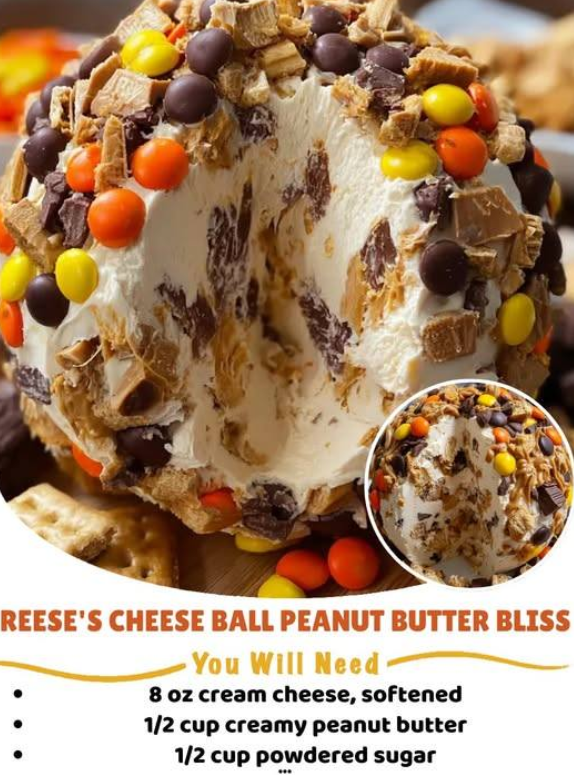
In the culinary landscape of 2026, the Peanut Butter Cheese Ball is defined as a Semi-Solid Lipid Composite. The cream cheese ($pH \approx 4.5$) provides a protein scaffolding that traps the peanut butter’s oil droplets. This prevents the “oil separation” common in natural peanut butters, resulting in a smooth, homogenous mouthfeel.
The addition of particulates (chocolate candies) introduces a Textural Gradient. Because these candies are coated in a sugar shell, they act as localized moisture barriers, ensuring the chocolate inside remains crisp despite being encased in a high-fat dairy medium.
2. Ingredients: The Structural Infrastructure
Success in this assembly requires a precise ratio of saturated to unsaturated fats to ensure cold-set stability.
- 8 oz Cream Cheese: The primary structural matrix. The high casein content provides the necessary “tack” for dipping.
- 1/2 Cup Creamy Peanut Butter: The primary flavor and lipid source. It provides the characteristic roasted legume aromatics.
- Sugar & Chocolate Particulates: (Standard additions like powdered sugar or mini-chips) These act as Dry-Matter Stabilizers, absorbing excess moisture from the cream cheese.
