
Phase 1: Ambient Tempering
Bring the cream cheese to room temperature (approx. 70°F). This is a Regulatory Requirement; cold cream cheese will not emulsify with peanut butter, leading to “lipid spotting”—small, unmixed chunks of dairy that disrupt the sensory experience.
Phase 2: Homogenization
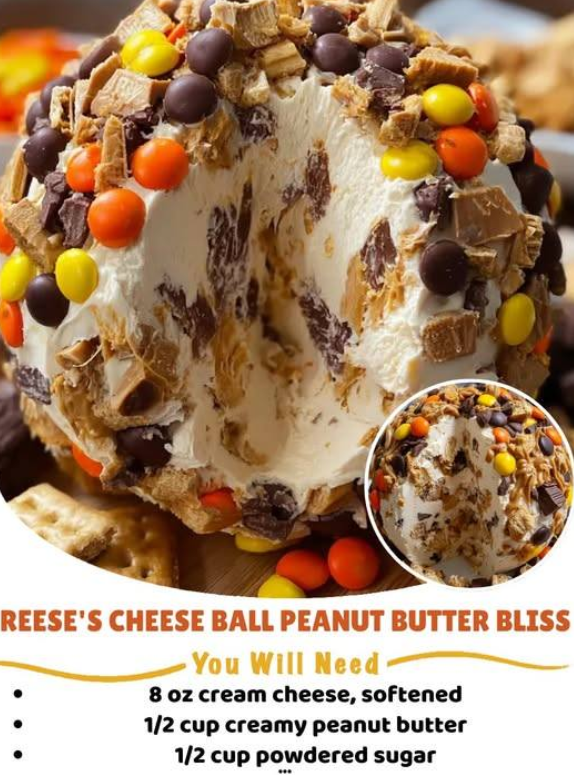
Beat the cream cheese and peanut butter until no color streaks remain. This ensures the Lipid-Protein Bond is uniform throughout the sphere. Introduce your powdered sugar and mix until the viscosity increases significantly.
Phase 3: Particulate Suspension & Setting
Fold in the chocolate candies. Shape the mixture into a sphere and wrap in plastic film. Refrigerate for at least 2 hours. This Cold-Set Crystallization is vital; it allows the fats to lock the shape into place before final coating and service.
4. Service and Storage: Dip Dynamics
The choice of “dipper” (pretzels, apple slices, or graham crackers) is a matter of Mechanical Strength. The dip must be served at approximately 60°F—cool enough to hold its shape but warm enough to have a low Yield Stress (the force required to break the surface with a cracker).
| State | Consistency | Dipping Strategy |
|---|---|---|
| Fridge Cold (40°F) | Firm, sliceable. | Best for sturdy pretzels/biscuits. |
| Tempered (60°F) | Creamy, pliable. | Best for fruit slices and soft wafers. |
| Ambient (72°F) | Spread-like; high flow. | Requires a bowl for containment. |
5. Tips: The Professional’s Secrets
The Salt Regulation: Peanut butter and cream cheese are both high in sodium, but adding a pinch of sea salt to the exterior coating enhances the perception of sweetness through Contrast Enhancement, making the chocolate flavors pop.
- The Particle Shield: If using mini Reese’s Pieces for the outside, apply them just before serving. The moisture in the cheese ball can slowly dissolve the candy shells over 24 hours.
- The Core Strength: For a “lava” effect, freeze a small dollop of pure peanut butter and wrap the cheese mixture around it. As it tempers, the center will stay softer than the shell.
6. Variations: Customizing the Sensory Profile
- The “Crunch” Variant: Use extra-crunchy peanut butter. The roasted peanut fragments provide Structural Reinforcement and a higher crunch-to-cream ratio.
- The Acidic Brightener: Add 1/2 tsp of vanilla extract or a pinch of orange zest to provide a high-note aromatic that “cuts” through the heavy fats.
- The Dark Cocoa Shift: Roll the finished ball in unsweetened cocoa powder before adding candies to provide a bitter-sweet complexity.
7. Conclusion: The Power of the Sphere
The Reese’s Cheese Ball is a triumph of Cold-Chain Confectionery. By respecting the softening points of your lipids and ensuring a proper emulsification of dairy and legume fats, you create a centerpiece that is as structurally sound as it is indulgent. Master the tempering, and you master the party. Enjoy the blissful result!
Frequently Asked Questions:
Q: My cheese ball is too soft to roll! What happened?
A: This is usually due to Over-Hydration. If your peanut butter is “natural” (very oily) or your cream cheese was too warm, it won’t hold. Add an extra 1/4 cup of powdered sugar to bind the excess oil.
Q: Can I make this in advance?
A: Yes! You can form the ball up to 3 days in advance. However, wait to add the external candy coating until the day of service to maintain the crunch.
Q: Is there a lower-fat version?
A: You can use “Neufchâtel” cheese, but avoid fat-free cream cheese; it lacks the Lipid Structure required to maintain a spherical shape, and the ball will likely “slump” on the platter.
Related posts:
 The Biomechanics of the Roulade
 Mastering the Ultimate Butterfinger Peanut Butter Balls
 The No-Bake Confection: Mastering Peanut Butter Snowballs
 The No-Bake Confection: Mastering Peanut Butter Snowballs
 No-Bake Nirvana: Mastering Buckeye Bars
 Effortless Indulgence: Mastering No-Bake Peanut Butter Balls
