
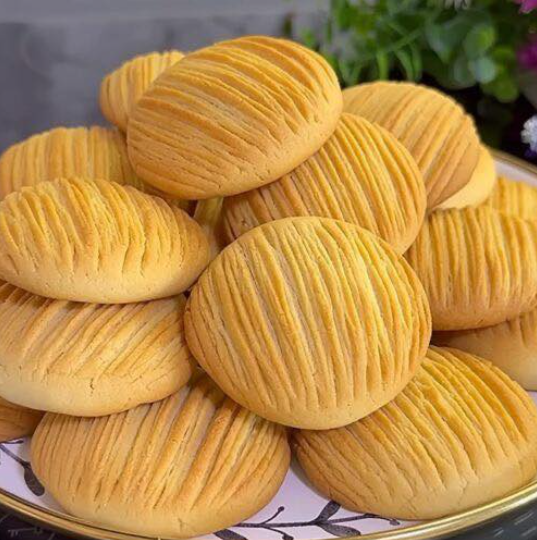
The Science of Crispness: Mastering Biscuit-Style Shortbread Cookies
Introduction: Engineering the Perfect Snap
The **Crispy, Biscuit-Style Cookie** is a variation on classic European *sablé* or shortbread, designed specifically to achieve a maximum snap and delicate crumb. Unlike chewier cookies that rely on brown sugar and high moisture, this recipe utilizes **powdered sugar** and a careful balance of **two fats**—butter and vegetable oil—to control spreading and moisture content.
The inclusion of **powdered sugar** (confectioners’ sugar) is a key component for crispness and texture. Unlike granulated sugar, which contributes to spreading and can make cookies gritty, powdered sugar contains a small amount of cornstarch. This cornstarch inhibits gluten development, contributing to the tender, short, and sandy texture that defines a perfect shortbread. It also absorbs moisture, resulting in a drier cookie that snaps when cooled.
The combination of **butter (100g)** and **vegetable oil (half a tea glass)** is critical for flavor and stability. Butter provides the rich, deep flavor necessary for any quality cookie. However, butter is only about 80% fat and 20% water. Replacing some of the butter with 100% pure fat (oil) achieves a number of goals: it further inhibits gluten formation (because there is less water to hydrate the flour), it increases the cookie’s tenderness, and it slightly elevates the fat’s smoke point, helping to achieve that beautiful golden-brown color without burning the delicate dough.
The regulation to **”mix until a smooth, homogeneous dough forms”** must be followed precisely. These ingredients create a ‘short’ dough, meaning the high fat content physically coats the flour particles, preventing the formation of long, elastic gluten strands. Any excessive mixing or kneading beyond the point of coalescence will activate the gluten in the 3 cups of flour, resulting in a tough, chewy, and hard cookie—the absolute antithesis of a biscuit-style shortbread.
Finally, the gentle leavening (1 teaspoon of baking powder) and the low moisture from the single egg and dry sugar ensure a minimal rise. The result is a thin, dry cookie—the ideal canvas for achieving maximum crispness upon cooling. This article details the precise steps needed to execute this recipe flawlessly, ensuring a cookie that is tender, buttery, and perfectly crispy every time.
