The ingredient list is optimized for maximum shortness and crispness:
I. The Fat and Sweetness Base:
- **100 g** of butter (Room temperature, for flavor)
- **1 cup** of powdered sugar (For crispness and fine texture)
- **Half a tea glass** of vegetable oil (For tenderness and stability)
II. The Structure and Leavening:
- **1** egg (The primary binder)
- **3 cups** of flour (All-purpose flour recommended)
- **1 teaspoon** of baking powder (Light chemical leavening)
- **A pinch** of salt (Flavor contrast)
- **1 packet** of vanilla (Vanilla powder or extract for aroma)
Instructions: Mastering Dough Handling and Baking
Phase 1: Creaming the Fats and Controlling the Mix
- **Prep Ingredients and Oven:** Preheat the oven to **$170^\circ\text{C}$ ($340^\circ\text{F}$)**. Line two large baking trays with parchment paper. Ensure the butter is at room temperature.
- **Creaming:** In a large bowl, cream the **softened butter, powdered sugar, vanilla, and salt** until the mixture is light and fluffy. This introduces air, which contributes to the final crumb structure.
- **Add Liquid Fats and Egg:** Add the **egg** and the **vegetable oil**. Mix thoroughly until the mixture is uniform and emulsified. The oil will blend well with the egg and butter.
- **Combine Dry Ingredients:** In a separate bowl, whisk together the **3 cups of flour** and **1 teaspoon of baking powder**. Whisking ensures the leavening agent is fully dispersed.
- **Form the Dough (CRITICAL):** Gradually add the flour mixture to the wet ingredients. Mix on low speed, or use a spatula, only until the dry ingredients are fully incorporated and the dough comes together in a ball. **Stop mixing immediately.** Excessive mixing will develop gluten, resulting in a hard cookie.
- **Chill:** Wrap the dough ball in plastic film and **refrigerate for 30 minutes**. Chilling firms the fats, making the dough easy to roll and cut, and preventing excessive spreading during baking.
Phase 2: Shaping and Baking for Crispness
- **Rolling:** Remove the chilled dough. On a lightly floured surface or between two sheets of parchment paper, roll the dough out to a thickness of **$3 \text{ mm}$ to $5 \text{ mm}$** (about 1/8 to 1/5 inch). Thinness is key for crispness.
- **Cutting:** Cut the dough into desired shapes (discs, squares, or simple rectangles typical of biscuits). Prick each cookie several times with a fork (docking). **Docking** prevents large air bubbles from forming and ensures a flat, even surface, essential for a uniform, crispy texture.
- **Bake:** Arrange the cookies on the prepared baking sheets. Bake in the $170^\circ\text{C}$ oven for **12–15 minutes**. The cookies are done when the edges are lightly golden, but the center is still pale.
- **Cooling (CRITICAL):** Remove the cookies from the oven and let them cool on the baking sheet for **5 minutes** before transferring them to a wire rack. **Full, undisturbed cooling** is mandatory. The crispness develops only as the cookie temperature drops and the moisture fully evaporates.
Serving and Storage: Preserving the Snap
The enemy of a crispy cookie is moisture. Proper storage is essential to maintain the desired texture.
- **Serving:** Serve fully cooled. These cookies are perfect for dipping in coffee or tea, or accompanying light creams and fruit spreads.
- **Storage:** Store cooled cookies in an **airtight container at room temperature for up to 1 week**. Avoid storing them near high-moisture items like cakes or fresh bread.
- **Troubleshooting Softness:** If the cookies lose their crispness (due to high humidity), spread them on a baking sheet and **rebake at a low temperature ($150^\circ\text{C}$ / $300^\circ\text{F}$) for 5–8 minutes**. This re-dries the cookies, restoring the snap.
- **Freezing:** **Baked and cooled** cookies can be frozen in an airtight container for up to 3 months. **Unbaked dough** can also be frozen, wrapped tightly, and sliced or rolled when thawed.
Tips: Essential Techniques for Max TenderneSS
The Powdered Sugar Advantage: Always use powdered sugar for this recipe. Its fine texture and cornstarch content are instrumental in creating the desirable sandy, tender crumb, which granulated sugar cannot replicate.
Avoid Flour Contamination: When rolling the dough (Step 7), use as little extra flour as possible on the counter. Excess flour is incorporated into the dough, drying it out and making it tough. Rolling between parchment paper is the ideal solution.
Cooling Isolation: Do not store crispy cookies with soft cookies (like oatmeal or chocolate chip). The moisture transfer from the softer cookies will quickly turn your biscuits soft and chewy.
Egg Temperature: Ensure the egg (Step 3) is at room temperature. A cold egg will seize the butter, resulting in a lumpy mixture that hinders the proper formation of the dough structure.
Oven Temperature Consistency: Baking at $170^\circ\text{C}$ is a gentle temperature perfect for shortbread. A higher temperature will brown the outside before the interior is sufficiently dried out, compromising the final snap.
Variations: Customizing Flavor and Texture
The simple shortbread base is an excellent platform for easy flavor changes:
- **Citrus Zest:** Add **1 tablespoon of fresh lemon or orange zest** to the butter/sugar mixture (Step 2) for a bright, aromatic lift that pairs well with the vanilla.
- **Nutty Crunch:** Fold in **1/4 cup of finely chopped nuts** (almonds, walnuts, or pecans) at the end of the mixing process (Step 5) for added crunch and richness.
- **Spice Blend:** Add **1 teaspoon of ground cinnamon** and **1/4 teaspoon of nutmeg** to the flour mixture (Step 4) for a warm, seasonal flavor.
- **Jam Thumbprints:** Form the dough into small balls (do not roll). Press a small indentation into the center of each ball and fill with **raspberry or apricot jam** before baking.
- **Glaze Finish:** After the cookies are completely cool, dip half of the cookie in a simple glaze made from powdered sugar and a few drops of milk or lemon juice.
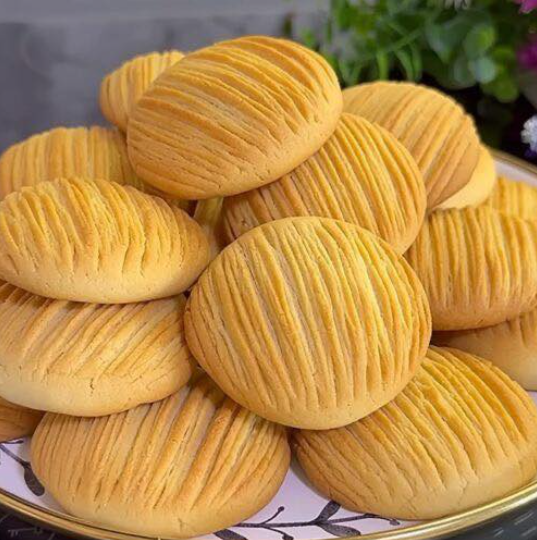
The Final Appearance: The perfect biscuit-style cookie should have a uniform, pale golden color across the base and edges, with a lighter center. Avoid deep browning, which indicates over-baking and a potential tough texture.
Uniform Thickness: Use two wooden dowels or rulers of equal thickness placed on either side of your dough as a guide when rolling (Step 7). This ensures every cookie is the same thickness, guaranteeing uniform baking time and consistent crispness.
No Leavening Substitution: Use baking powder as specified. Do not substitute baking soda, which requires an acid to fully activate and can leave a metallic or soapy taste if not balanced correctly.
Re-rolling Scraps: Gather the dough scraps, press them gently together into a disc, and chill for 10 minutes before re-rolling. **Do not knead** them—this overworks the gluten and the final batch will be tougher than the first.
Conclusion: A Staple of the Pantry
This recipe for Crispy, Biscuit-Style Cookies is a testament to the fact that technical precision dictates texture. By employing powdered sugar for tenderness, carefully balancing butter and oil for richness and stability, and adhering strictly to the ‘minimal mixing’ rule, you create a perfect shortbread. This cookie is a classic staple: reliable, versatile, and guaranteed to deliver a satisfying snap, proving that even the simplest ingredients can achieve culinary excellence when handled correctly.
Frequently Asked Questions (FAQ)
Q: My cookies came out soft and chewy, not crispy. What happened?
A: The cookies were likely **under-baked** (not enough moisture evaporated) or were rolled **too thick**. Ensure they are rolled to $3 \text{ mm}$ and fully cooled on a rack. They may need another 1–2 minutes in the oven to fully dry out.
Q: Can I use all butter instead of butter and oil?
A: Yes, but your cookies may be slightly less tender and prone to spreading more, as butter has more water. If you use all butter, increase the amount to approximately $150 \text{ g}$ to account for the lost oil volume, and chill the dough longer.
Q: Why does the recipe call for powdered sugar instead of granulated?
A: Powdered sugar dissolves better, creating a smoother dough, and the cornstarch content helps inhibit gluten, leading to a much more tender and crisp final cookie.
Q: My dough was too crumbly to roll. What should I do?
A: The flour measurement might be slightly heavy. Add 1 teaspoon of **cold milk or water** at a time to the dough, mixing only until it just comes together into a cohesive ball. Do not add too much, or the resulting cookie will be tough.