Phase 1: The Thermal Boil
In a heavy-bottomed saucepan, whisk together the sugar and cornstarch. Stir in the corn syrup, water, butter, and salt. Place over medium heat and stir constantly until the sugar dissolves. The “No-Stir” Regulation: Once the mixture begins to boil, stop stirring. Attach a candy thermometer and cook undisturbed until the syrup reaches 252°F to 254°F (122°C to 123°C), also known as the hard-ball stage.
Phase 2: Flavoring and Cooling
Immediately remove the pan from the heat. Stir in your extract and food coloring. Pour the hot syrup onto a well-buttered baking sheet or a silicone mat. Do not scrape the bottom of the pan, as crystallized sugar there can ruin the texture. Let the taffy cool for about 10–15 minutes until it is cool enough to handle but still very warm.
Phase 3: The Manual Pull
Butter your hands thoroughly. Pick up the taffy and begin to pull it out, then fold it back over itself. The Aeration Rule: Continue this stretching and folding process for 10–15 minutes. You will notice the taffy change from translucent to opaque, and the color will lighten significantly. It is ready when it becomes difficult to pull and holds its shape.
Phase 4: Shaping and Snipping
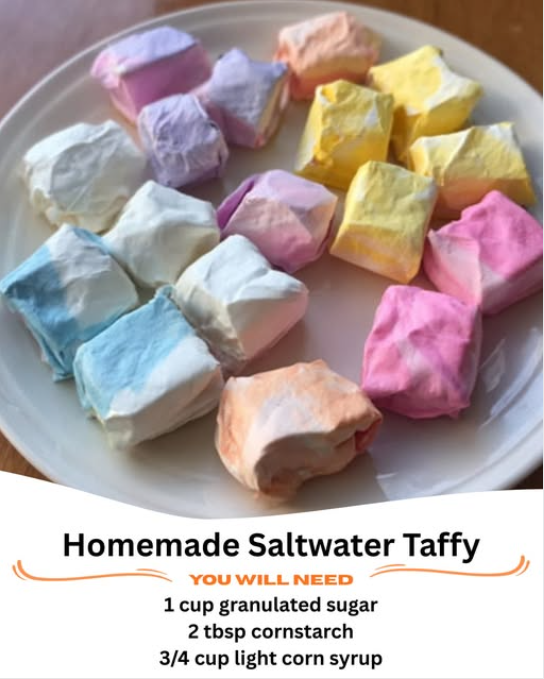
Pull the taffy into long, thin ropes about 1/2 inch in diameter. Using buttered kitchen shears, snip the ropes into 1-inch bite-sized pieces.
Service and Storage Tips:
- The Wrapper Rule: Taffy is highly hygroscopic (it absorbs moisture from the air). Wrap each piece immediately in a small square of wax paper and twist the ends to keep them “yummy” and soft.
- Storage: Keep in an airtight container at room temperature. Properly wrapped taffy will stay fresh for up to 2 weeks.
- The Fridge Warning: Do not refrigerate taffy! The cold will make it rock hard, and the humidity of the fridge can make it sticky once it warms back up.
Tips:
- Humidity Matters: Try to avoid making taffy on a very rainy or humid day. The sugar will absorb moisture from the air, making the taffy “weep” or become overly sticky.
- Candy Thermometer Accuracy: Before starting, test your thermometer in boiling water. If it reads 210°F instead of 212°F, adjust your final target temperature accordingly.
- Flavor Pairing: Peppermint, watermelon, and blue raspberry are “dreamy” classics. For a more sophisticated profile, try a “Salted Vanilla” by adding a few extra flakes of sea salt during the pull.
conclusion:
Homemade Saltwater Taffy is a labor of love that rewards you with a texture no store-bought candy can replicate. By mastering the thermal hard-ball stage and putting in the “elbow grease” required for pulling, you create a “melt-in-your-mouth” treat that is as fun to make as it is to eat. It is a foolproof way to bring a bit of the summer boardwalk into your own kitchen any time of year. One bite of that soft, airy chew and you’ll understand why this has been a favorite for over a century.
Would you like me to suggest some specific flavor-and-color combinations to create a “Rainbow Assortment,” or perhaps provide a troubleshooting guide for if your taffy turns out too hard or too soft?