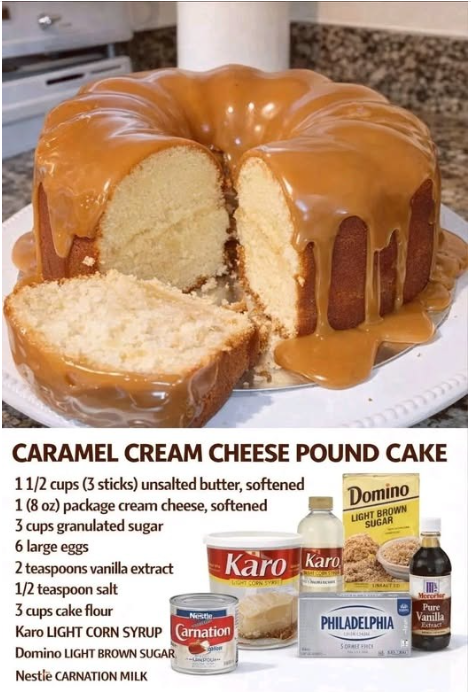
The secret to a perfect pound cake is the aeration of the butter. Follow these steps for a cake that is dense but never heavy:
- Prep Work: Preheat your oven to 325°F (160°C). Heavily grease and flour a 6-cup bundt pan or a standard loaf pan. Pound cakes bake low and slow to ensure even rising.
- Creaming Phase: In a large bowl, beat the softened butter, cream cheese, and sugar together for at least 5 minutes. The mixture should turn pale yellow and look fluffy. This step creates the air pockets needed for the cake to rise.
- Egg Integration: Add the eggs one at a time, beating well after each addition. Scrape down the sides of the bowl to ensure no streaks of butter remain.
- The Liquid Blend: Stir the vanilla extract and caramel sauce into the milk (or heavy cream).
- Dry and Wet: Reduce your mixer speed to low. Add the flour and salt in three parts, alternating with the caramel-milk mixture. Begin and end with the flour. Note: Stop mixing the moment the last streak of flour disappears to avoid a tough cake.
- The Bake: Pour the batter into the prepared pan and smooth the top. Bake for 60 to 75 minutes. The cake is done when a long wooden skewer inserted into the center comes out clean or with just a few moist crumbs.
- The Cooling: Let the cake cool in the pan for 10–15 minutes before inverting it onto a wire rack. Cooling in the pan briefly helps the structure set.
Serving and Storage
Pound cake is a rare dessert that actually tastes better the second day, as the flavors have time to deepen.
- Serving: Serve a thick slice slightly warmed. It is divine on its own, but a drizzle of extra salted caramel and a sprinkle of sea salt can take it to a five-star level.
- Storage: Wrap the cooled cake tightly in plastic wrap. It can stay at room temperature for up to 3 days or in the refrigerator for 7 days.
- Freezing: This cake freezes beautifully. Slice it first, wrap individual pieces in parchment and foil, and freeze for up to 3 months for an “emergency” sweet treat.
Tips
“Patience in the creaming stage leads to perfection in the tasting stage.”
- Temperature Matters: If your butter or cream cheese is too cold, the batter will break (look curdled), and the cake won’t rise properly.
- Sift Your Flour: For the finest “velvet” texture, sift your flour before measuring. This prevents clumps and ensures the crumb is uniform.
- No Peeking: Avoid opening the oven door during the first 45 minutes of baking. A sudden drop in temperature can cause a pound cake to collapse in the middle.
Variations
This caramel-cream cheese base is the perfect canvas for creative additions:
| Variation | The Addition | The Experience |
|---|---|---|
| The Salted Toffee | 1/2 cup toffee bits in the batter | Crunchy and intensely buttery |
| The Praline | 1/2 cup chopped toasted pecans | A classic Southern nutty finish |
| The Spiced Caramel | 1 tsp ground cinnamon | Warm, cozy, and perfect for autumn |
Tips (For the Perfect Glaze)
If you want a truly show-stopping look, whisk together 1/2 cup of powdered sugar with 2 tablespoons of caramel sauce and a teaspoon of milk. Drizzle this over the completely cooled cake. The glaze will set into a semi-firm, shiny shell that adds an extra layer of caramel intensity to every bite.
Conclusion
The Caramel Cream Cheese Pound Cake is more than just a sweet ending to a meal; it is a celebration of texture and tradition. By combining the old-world reliability of a pound cake with the modern decadence of caramel and cream cheese, you create a dessert that appeals to every generation at the table. It is rich, elegant, and quietly sophisticated. Once you taste that first golden crumb, you’ll understand why this is one recipe you’ll never let go of.
Frequently Asked Questions
Can I use low-fat cream cheese?
It is not recommended. Full-fat cream cheese provides the necessary fat and moisture for the cake’s structure. Low-fat versions often have higher water content, which can make the cake gummy.
My cake is stuck in the Bundt pan! What do I do?
If the cake won’t release, wrap a hot, damp towel around the bottom of the pan for a few minutes. The steam will help loosen the sugars from the edges. Next time, try using a baking spray that contains flour.
Why did my cake develop a “thick” crust?
Pound cakes naturally have a thicker crust than sponges, but if it’s too hard, it may be due to over-baking or an oven that is running too hot. Check your oven temperature with an external thermometer.
Would you like me to provide a recipe for a 5-minute homemade salted caramel sauce to pair with this cake, or perhaps a guide on how to properly “cream” butter and sugar for the best lift?